
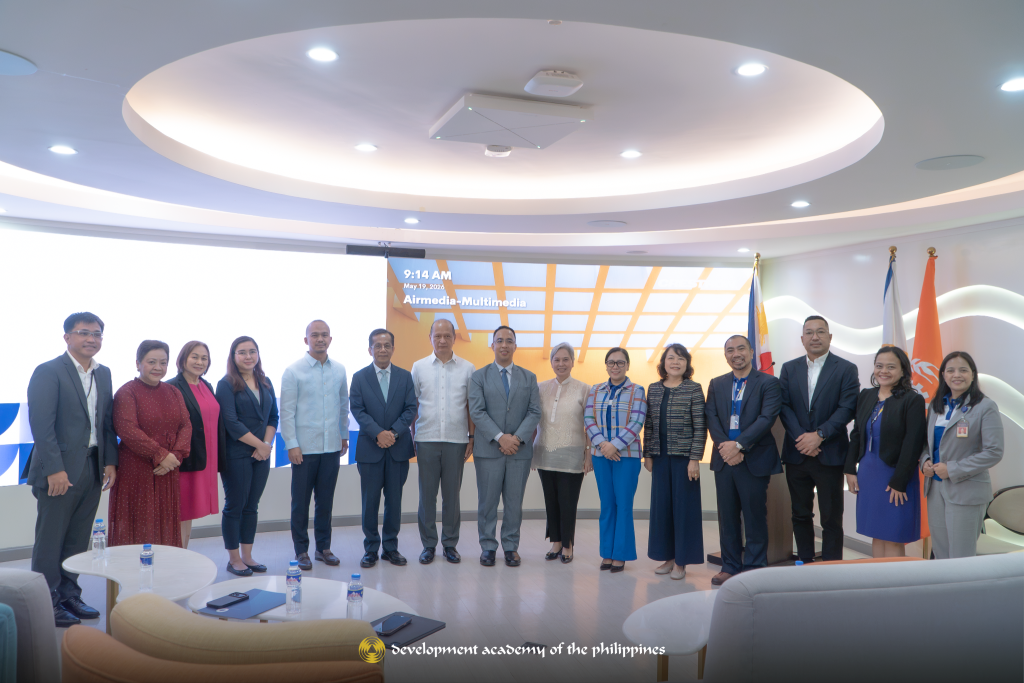
PASIG CITY – The Development Academy of the Philippines (DAP) marked its 53rd founding anniversary by reporting significant milestones in leadership development, governance innovation, digital transformation, and institutional strengthening, underscoring its expanding role in transforming the Philippine public sector.
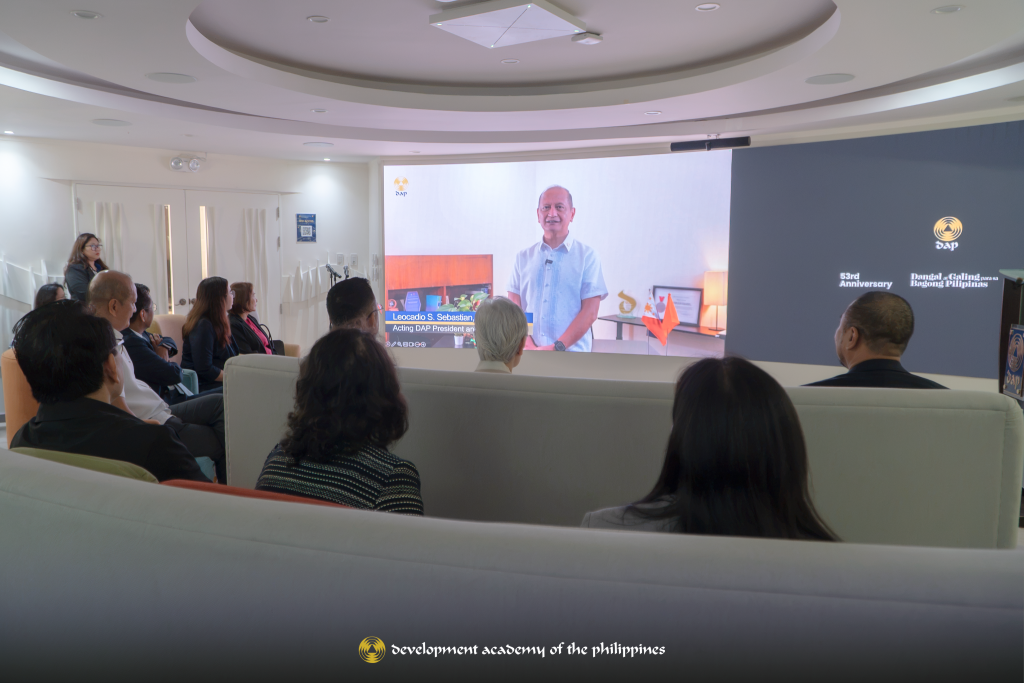
The anniversary celebration, held on 15 July 2026 before members of the DAP Board of Trustees, featured the presentation of the President’s Report, highlighting the Academy’s accomplishments over the past year and its strategic direction for the years ahead.
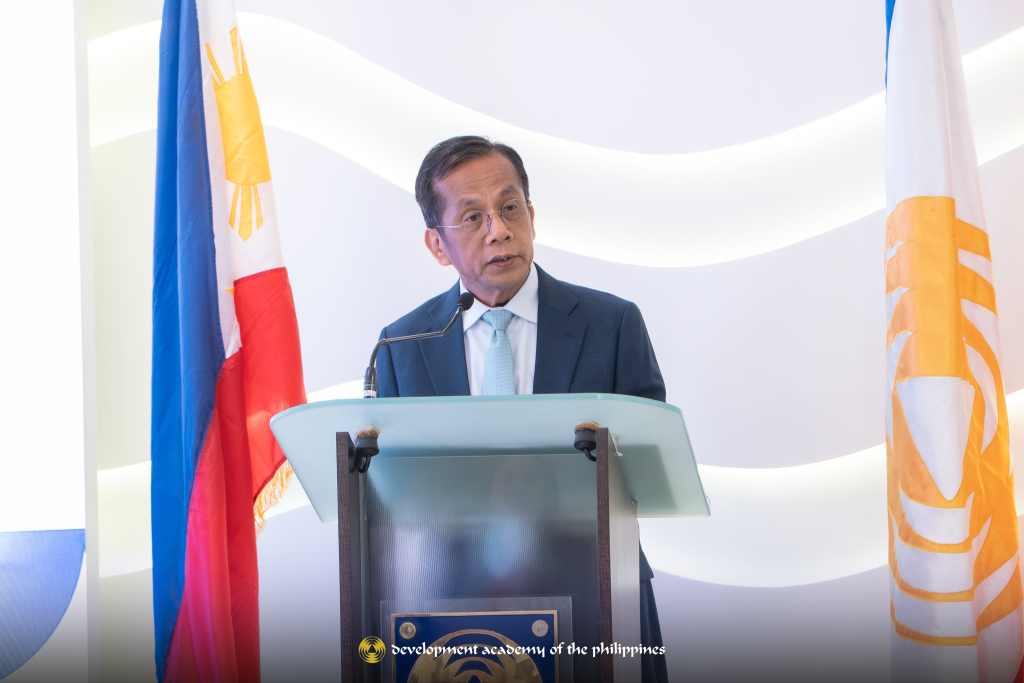
In his keynote message, DAP Board of Trustees Chairperson and Department of Economy, Planning, and Development (DepDev) Secretary Arsenio M. Balisacan emphasized that capable institutions and adaptive public servants remain at the heart of effective governance.
He underscored the Academy’s strategic role in cultivating leadership, driving innovation, and strengthening institutional capacity to enable the government to deliver better outcomes for every Filipino.
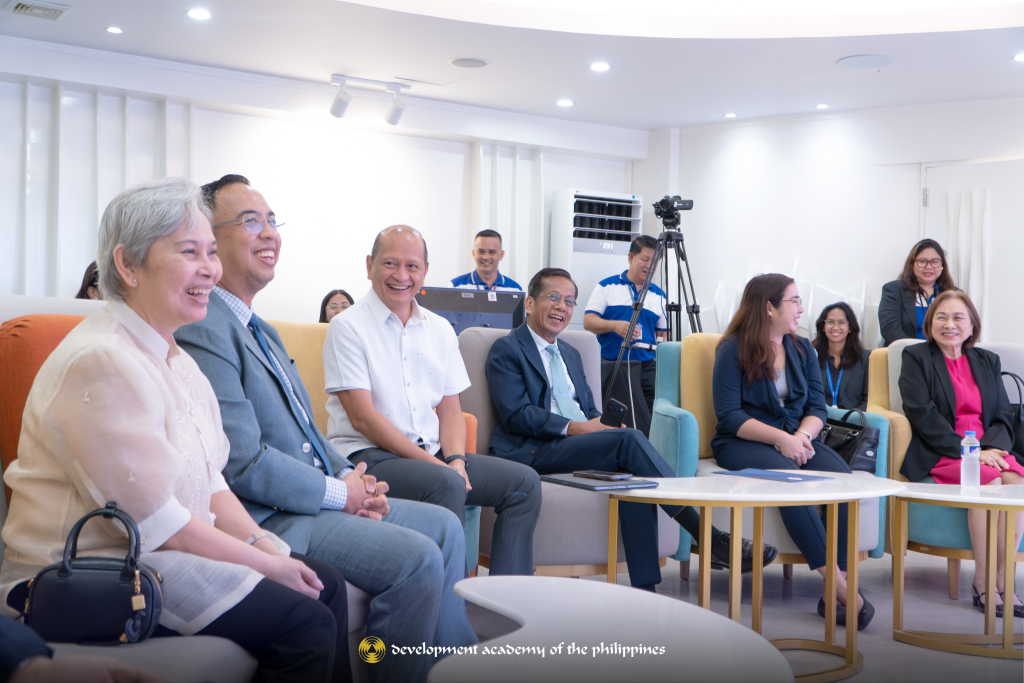
Joining the celebration were DepDev Undersecretary Melbourne Ziro D. Pana, Office of the Executive Secretary (OES) Undersecretary Erwin D. Sta. Ana, Department of Education (DepEd) Undersecretary Ronald U. Mendoza, Department of Agrarian Reform (DAR) Assistant Secretary Vinci A. Beltran, Department of Budget and Management (DBM) Acting Secretary Kim Robert de Leon and Acting Assistant Secretary Gerald R. Janda, who expressed support for DAP’s continuing mission of advancing public sector transformation.
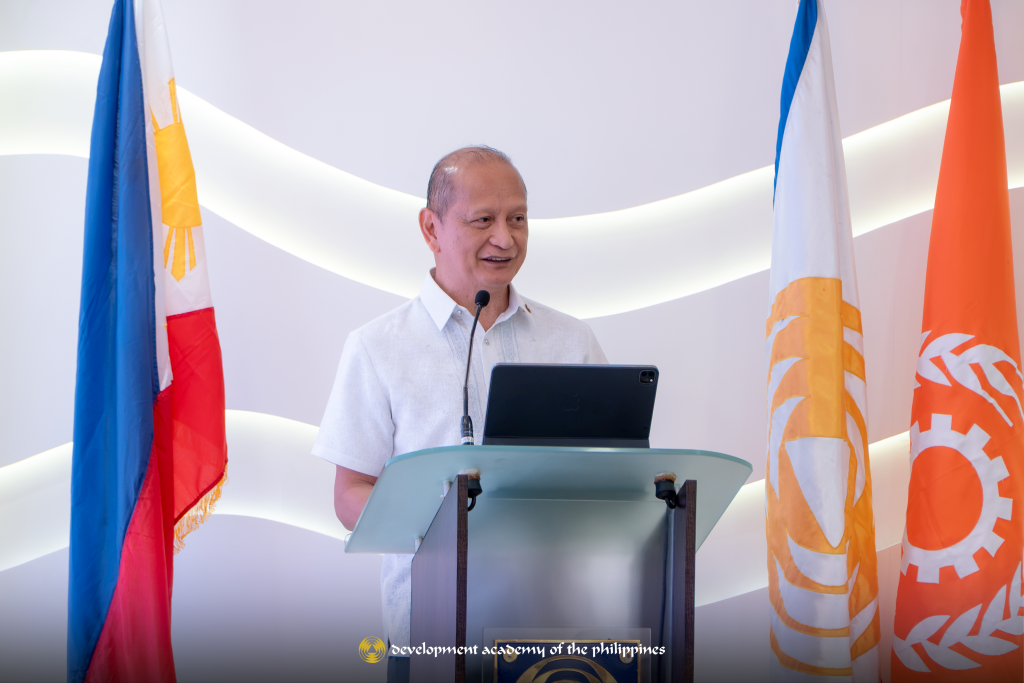
Presenting the President’s Report, DAP Acting President and CEO Leocadio S. Sebastian highlighted the Academy’s achievements in strengthening leadership, institutional capability, and innovation across government.
DAP continued to strengthen leadership and institutional capacity through its flagship capability development initiatives, including the Public Management Development Program (PMDP), the Capability-Building on Innovative Leadership for Legislative Staff (CBILLS), agency-tailored interventions, public course offerings, and the graduate degree programs of the Academy’s Graduate School of Public Management (GSPM).
Over the past year, the DAP trained 5,447 public leaders, managers, legislators, and government professionals, achieving a 98.67 percent completion rate across its programs. Participants also produced 256 capstone papers and innovation projects, offering practical solutions to governance challenges in healthcare, education, food security, transportation, finance, manufacturing, water resources, and public safety.
To expand access to these solutions, DAP published A Thousand Innovations, a compilation of 1,000 PMDP capstone projects that documents evidence-based approaches to improving public governance.
DAP also advanced government innovation through initiatives that generated measurable results. Under the Paperless Productivity Challenge, participating government agencies reported ₱162.4 million in documented savings by reducing paper consumption and streamlining processes. Meanwhile, NextGenPH engaged 139 schools, resulting in 431 innovation concept papers that encouraged students to develop creative solutions to real-world governance and community challenges.
Recognizing the growing importance of emerging technologies in government, DAP launched the National Capability-Building Program on Artificial Intelligence, equipping public servants with foundational AI competencies to support responsible digital transformation. Complementing this initiative was the DAP’s AI Training of Trainers Program, which strengthens in-house expertise while expanding AI learning opportunities across the bureaucracy.
DAP likewise invested in developing future public sector leaders through the Rising Leaders Development Program (BAGANI), which prepares young public servants to become ethical, systems-oriented, and values-driven leaders committed to nation-building.
Beyond capability development, DAP advanced institutional reforms through policy development, strategic partnerships, and technical assistance. Among its key initiatives were proposed Executive Orders institutionalizing the Government Quality Improvement Program and establishing a 𝗦𝘁𝗿𝗮𝘁𝗲𝗴𝗶𝗰 𝗣𝘂𝗯𝗹𝗶𝗰 𝗦𝗲𝗰𝘁𝗼𝗿 𝗛𝘂𝗺𝗮𝗻 𝗥𝗲𝘀𝗼𝘂𝗿𝗰𝗲 𝗗𝗲𝘃𝗲𝗹𝗼𝗽𝗺𝗲𝗻𝘁 Framework to strengthen quality management, workforce development, and succession planning across government.
DAP likewise expanded collaborations with Congress, national government agencies, higher education institutions, and local governments through initiatives such as Capability Building on Innovative Leadership for Legislative Staff (CBILLS) and the Elevating Leadership and Institutional Capacity towards Excellence in PH Higher Education (ELITE PHE). In Mindanao, the Academy supported governance and institutional strengthening through strategic planning, organizational development, quality management, and leadership development initiatives. It also assisted five government agencies in advancing toward ISO 9001:2015 certification, helping improve organizational performance and service delivery.
Internally, DAP continued strengthening its institutional capacity to support its expanding mandate. Its General Appropriations Act allocation increased from ₱437 million in 2025 to ₱1.1 billion in 2026, enabling the expansion of plantilla positions, accelerated employee development, and continued investments in digital systems and organizational reforms. The Academy also advanced its Integrated Management System, resumed construction of its New Training Building in Tagaytay, and continued improving workplace systems and infrastructure.
These organizational reforms support DAP’s forthcoming 2026-2030 Strategic Plan, which seeks to further establish the Academy as the government’s think tank, capability integrator, and catalyst for public sector transformation.
As DAP embarks on its 54th year, Sebastian emphasized that DAP’s greatest measure of success lies not in the number of programs it delivers, but in the institutions it strengthens and the public servants it empowers.