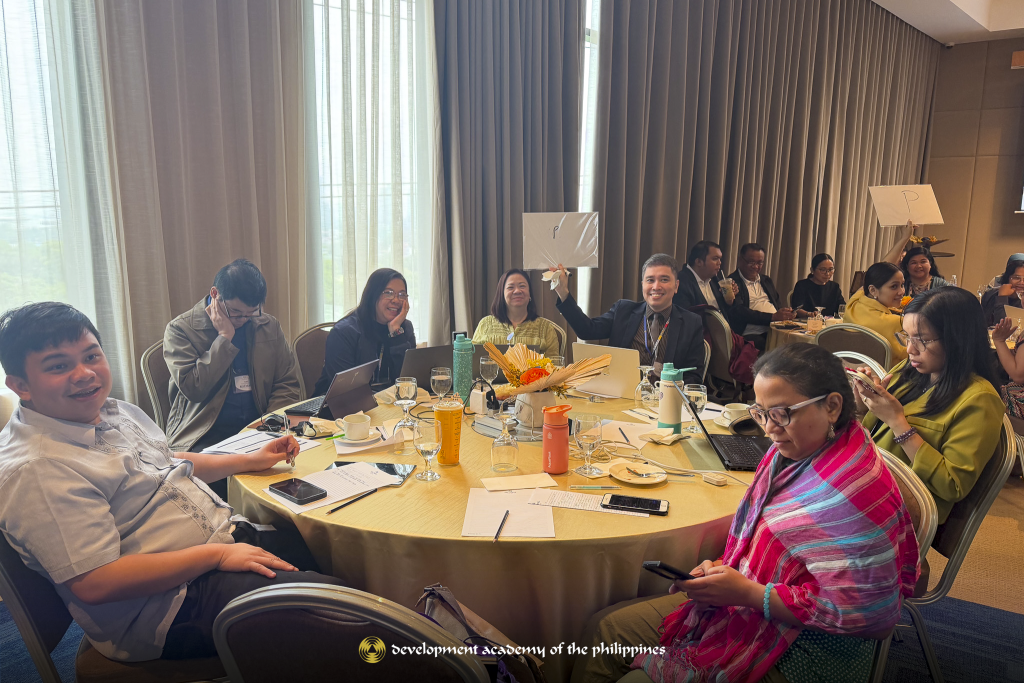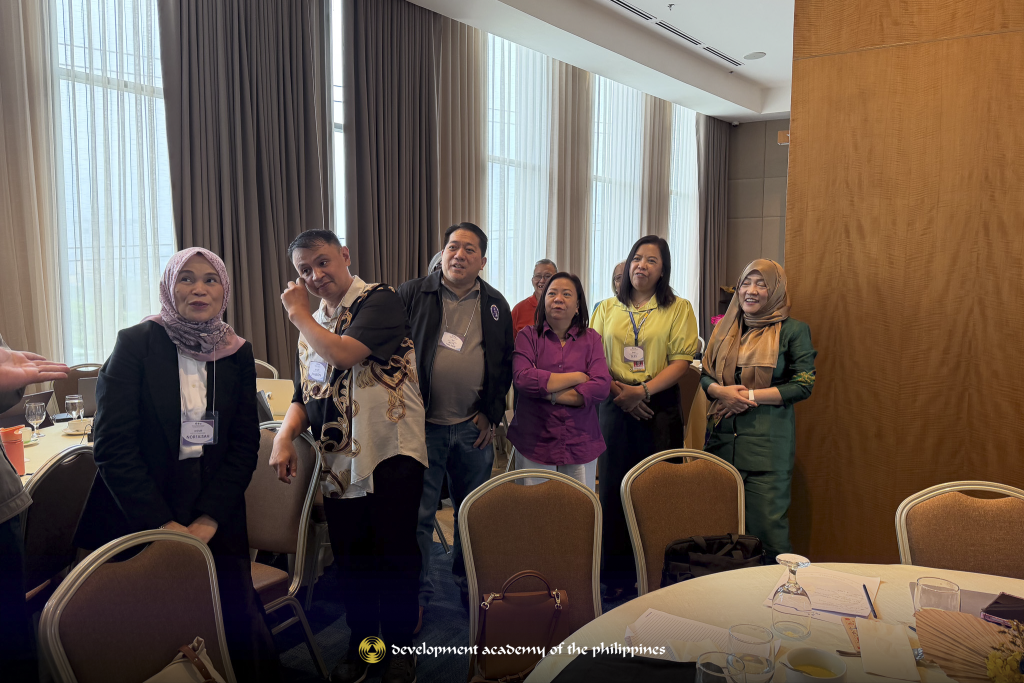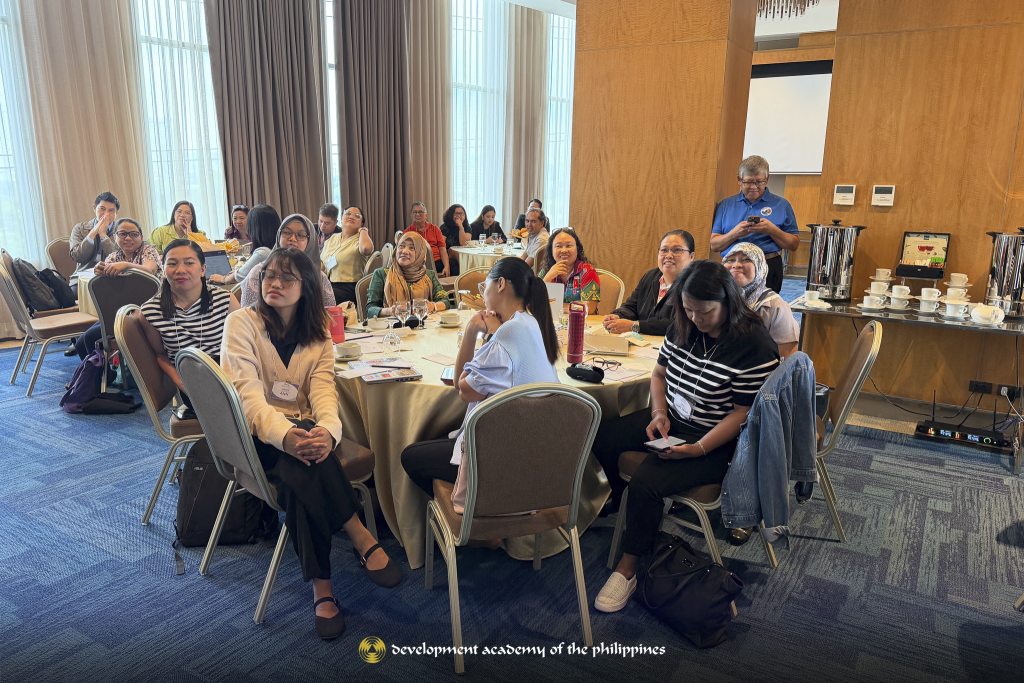
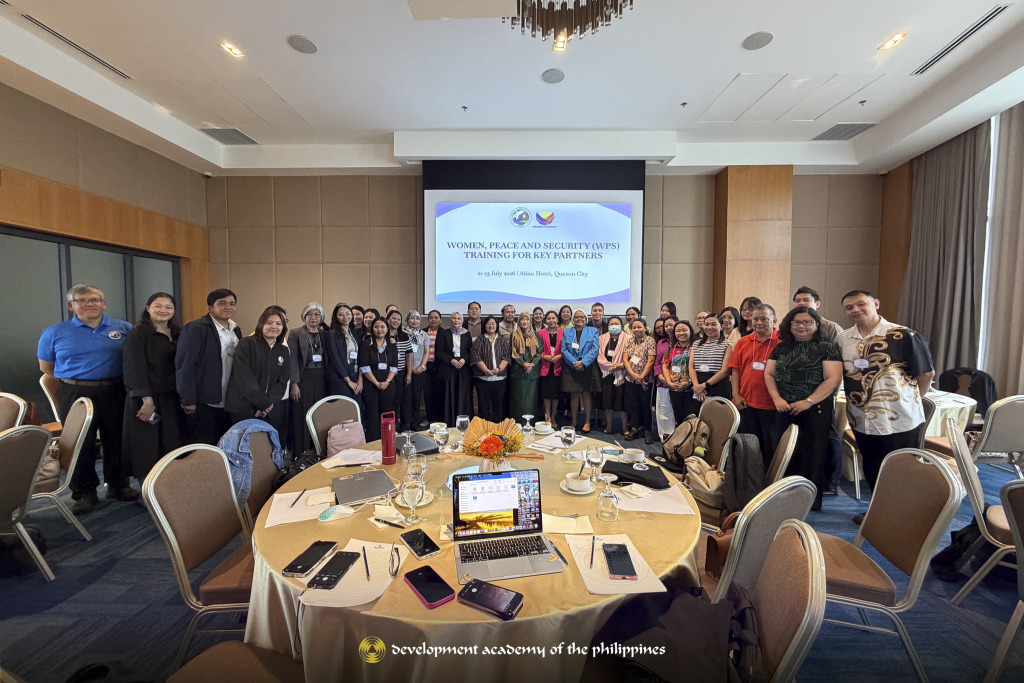
The Development Academy of the Philippines (DAP) reinforced its commitment to gender-responsive governance and sustainable peace as select members of its Gender and Development Technical Working Group (GAD TWG) participated in the Women, Peace and Security (WPS) Training for Key Partners held from 21 to 23 July 2026 at the Alino Hotel in Quezon City.
Organized by the Office of the Presidential Adviser on Peace, Reconciliation and Unity (OPAPRU), the three-day capability-building program brought together key institutional partners to strengthen the implementation and localization of the National Action Plan on Women, Peace and Security (NAP-WPS). The training formally opened with remarks from Executive Director Susana Guadalupe H. Marcaida of OPAPRU’s Local Conflict Transformation and Peace Sustainability, who underscored the importance of sustained collaboration among partner institutions in advancing the Women, Peace and Security agenda.
Through the training, the DAP delegation deepened its understanding of gender-responsive, conflict-sensitive, and peace-promoting approaches that can be integrated into the Academy’s programs, policies, and institutional initiatives. Their participation also supports DAP’s continuing contribution to the mainstreaming and localization of the NAP-WPS across the public sector.
Participants attended sessions on the Women, Peace and Security agenda, Conflict Sensitivity and Peace Promotion, Intersectionality as a Practice, Gender-Responsive Programming, Transitional Justice, Localization of the National Action Plan on Women, Peace and Security, Monitoring, Evaluation, Accountability and Learning (MEALS), and Strategic Communications. The sessions were facilitated by OPAPRU representatives and resource persons, including Atty. Maria Cleofe Gettie Sandoval, Reńe A. Gandeza Jr., Ekaterina Alessandra Ocampo, Katja Estioko, Kristine Kyla De Torres, and Gilliane Carmela Marie Bernabe. Interactive workshops and case-based exercises enabled participants to translate these concepts into practical strategies for policy development, program implementation, monitoring, and organizational decision-making.
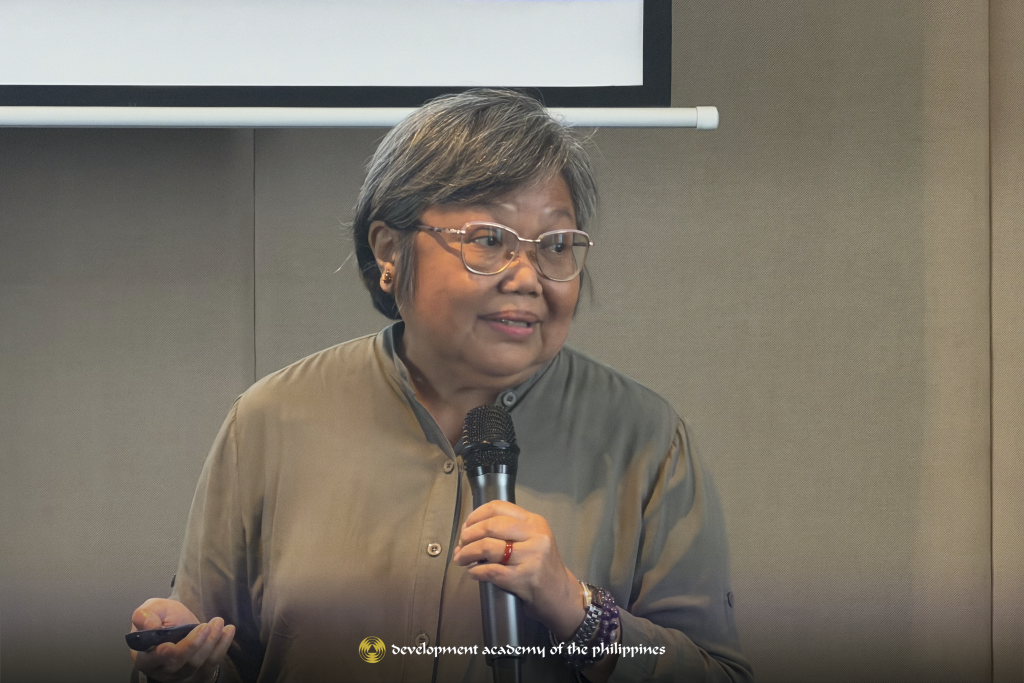
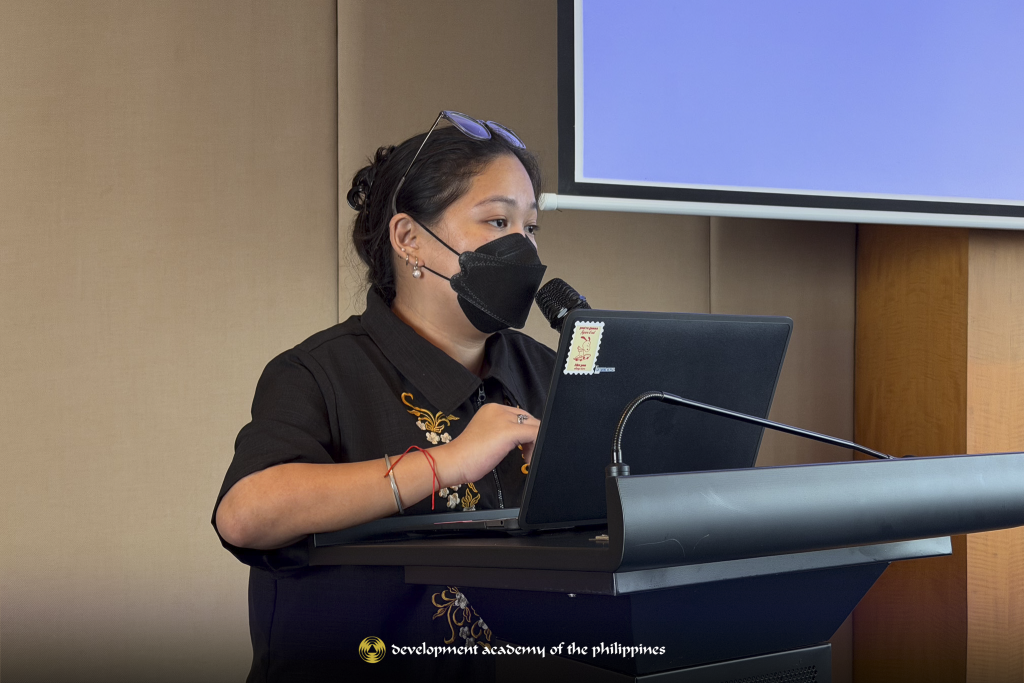
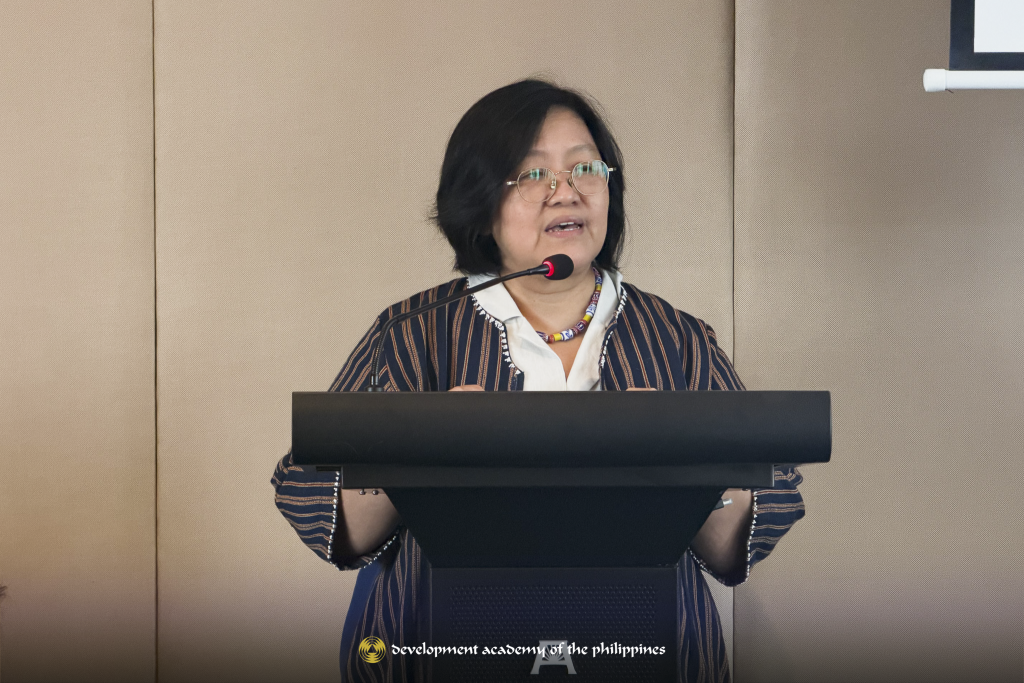
The training also fostered a stronger appreciation of women’s meaningful participation in peacebuilding, the importance of addressing intersecting forms of inequality, and the need to design programs that are inclusive and conflict-sensitive while avoiding unintended harm or exclusion.
As DAP continues to strengthen its Gender and Development mechanisms, the Academy remains committed to institutionalizing Women, Peace and Security principles across its operations. By integrating WPS priorities into the plans and initiatives of its Gender and Development Focal Point System (GFPS), DAP aims to further promote inclusive governance, gender equality, and sustainable peace through evidence-based public sector capacity development.