
Pasay City – The Development Academy of the Philippines (DAP), through its Center for Strategic Futures (CSF), brought together local and international experts, government institutions, and private-sector innovators to explore how artificial intelligence (AI) can advance governance and public service delivery during the Beyond DX: AI Transformation Forum for the Philippine Public Sector, held on October 22, 2026, at Conrad Manila.
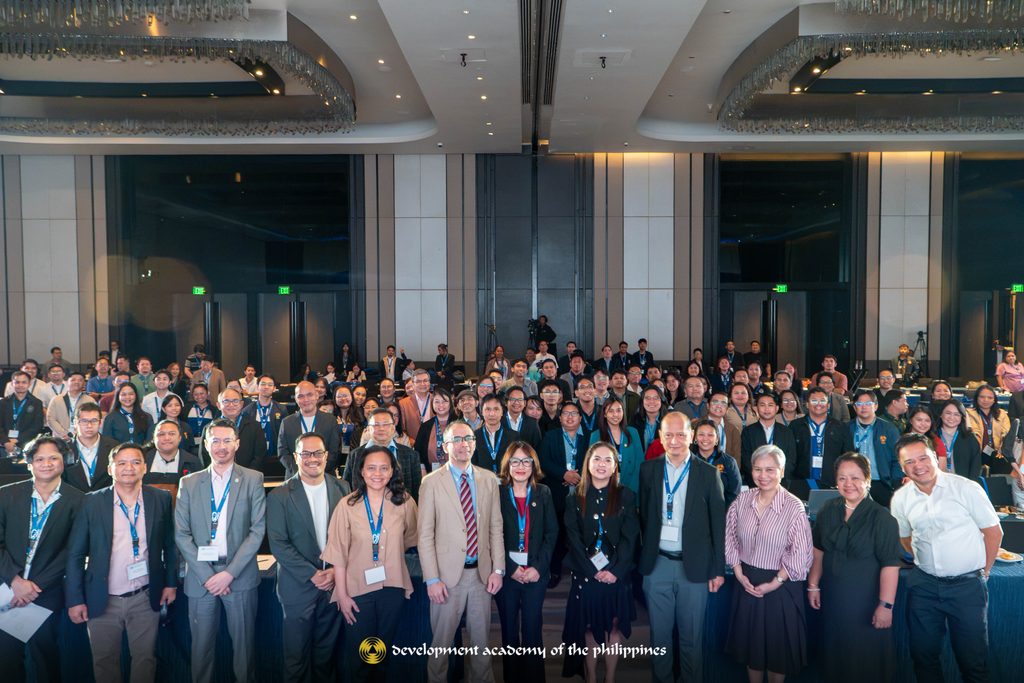
The forum forms part of DAP’s National Capability-Building Program on Artificial Intelligence and focused on three interconnected themes: building foundations for AI-ready government, moving from experimentation to adoption, and building transformation from within.
Government officials and delegates from Asian Productivity Organization (APO) member economies shared perspectives on institutional readiness, responsible AI adoption, and continuous learning and adaptation. The forum also featured demonstrations of AI-powered innovations from government agencies, private-sector organizations, and DAP personnel, highlighting practical applications of AI in public service and institutional operations.
Onwards to AI-ready Governance
In her opening remarks, DAP Acting Executive Vice President Magdalena L. Mendoza underscored the importance of citizens’ everyday experiences in guiding the government’s plans for AI adoption.
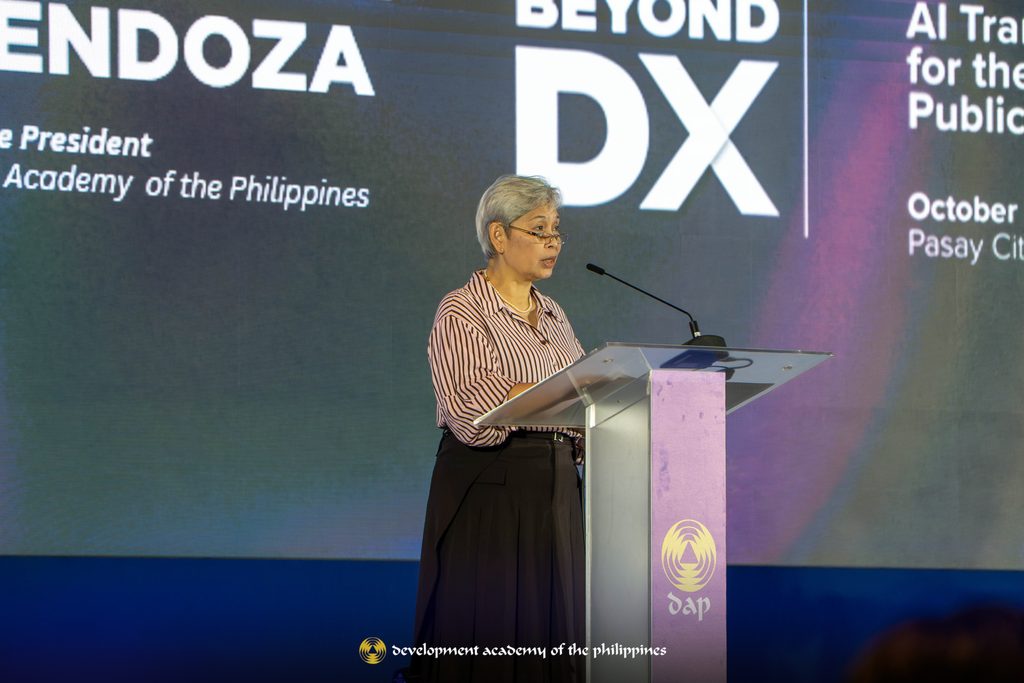
“For them, the value of transformation is measured in clearer answers, shorter waiting times, and services they can depend on,” she said.
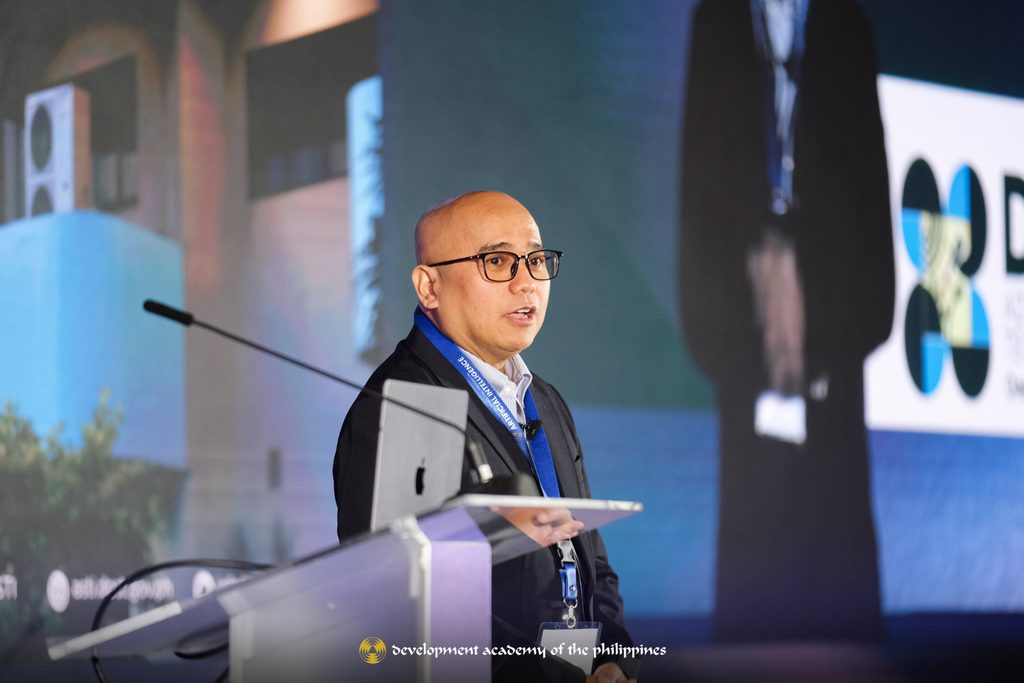
Echoing this perspective, Department of Energy Undersecretary Maria Francesca M. Del Rosario, in her keynote address, discussed the potential of artificial intelligence to create public value through a government integrated with AI.
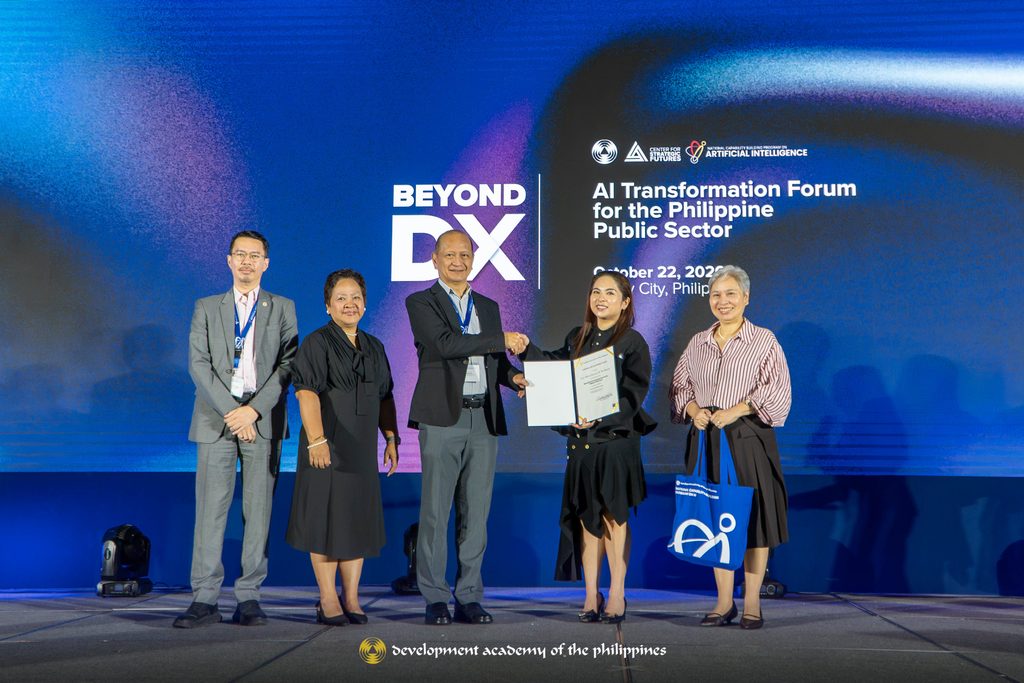
“AI transformation is not a technology project. It is a decision about the public value we want to create, and about whether people can trust the government that creates it,” she emphasized.
Adding an international productivity perspective, APO Secretary-General Dr. Indra Pradana Singawinata affirmed APO’s support through research, capacity building, and regional cooperation.
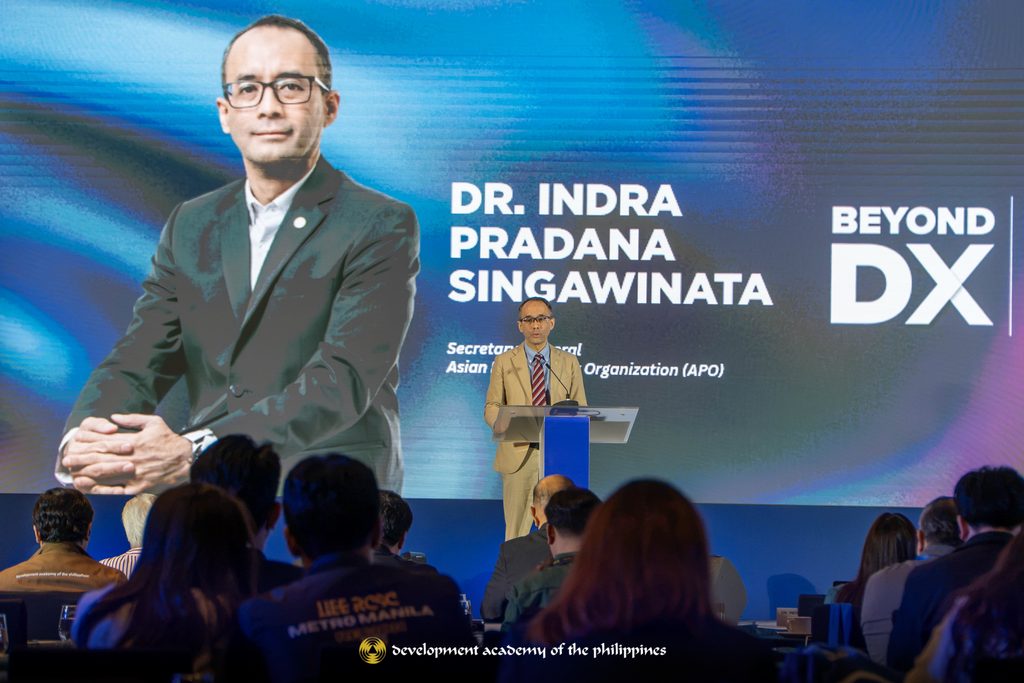
“Moving beyond digital transformation means moving beyond technology deployment towards institutional transformation,” he said, encouraging agencies to identify priority service challenges, establish safeguards, and measure results.
Building Foundations for AI-ready Government
The first thematic segment examined the foundations of AI-ready government through local and international perspectives, alongside demonstrations of government solutions from the Anti-Red Tape Authority (ARTA), Department of Budget and Management (DBM), Department of Science and Technology–Advanced Science and Technology Institute (DOST-ASTI), and the Quezon City Government.
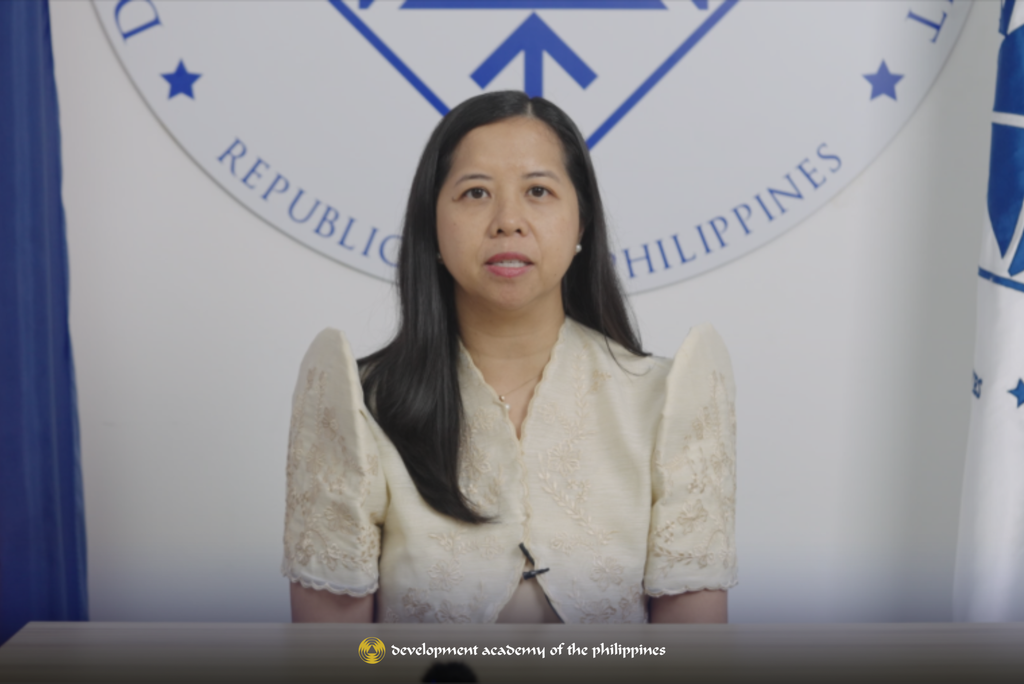
Department of Economy, Planning, and Development (DEPDev) Innovation Staff Director IV Diane Gail L. Maharjan emphasized the need for governance and safeguards alongside technology adoption in her presentation on the agency’s proposed AI Governance Framework. The framework outlined the need to safeguard national interests, enable innovation, uphold human rights, and ensure data privacy, security, and accountability.
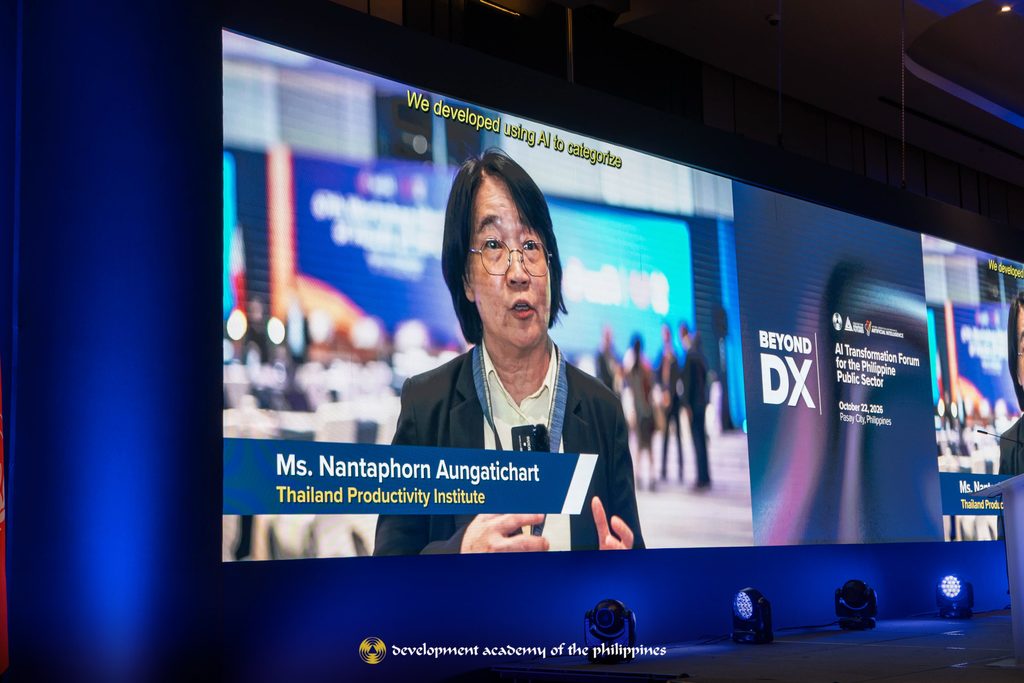
Thailand Productivity Institute Strategy and Organizational Development Division Director Nantaphorn Aungantichart highlighted how AI can improve public service delivery, strengthen productivity, and create meaningful outcomes for citizens. Meanwhile, Republic of Korea APO Director Dr. Park Sungjoong presented a forward-looking perspective on moving from reactive service delivery toward anticipating citizens’ needs.
The segment also showcased AI-powered innovations in the Philippine government, demonstrating how AI can support information access, citizen engagement, institutional work, and disaster response.
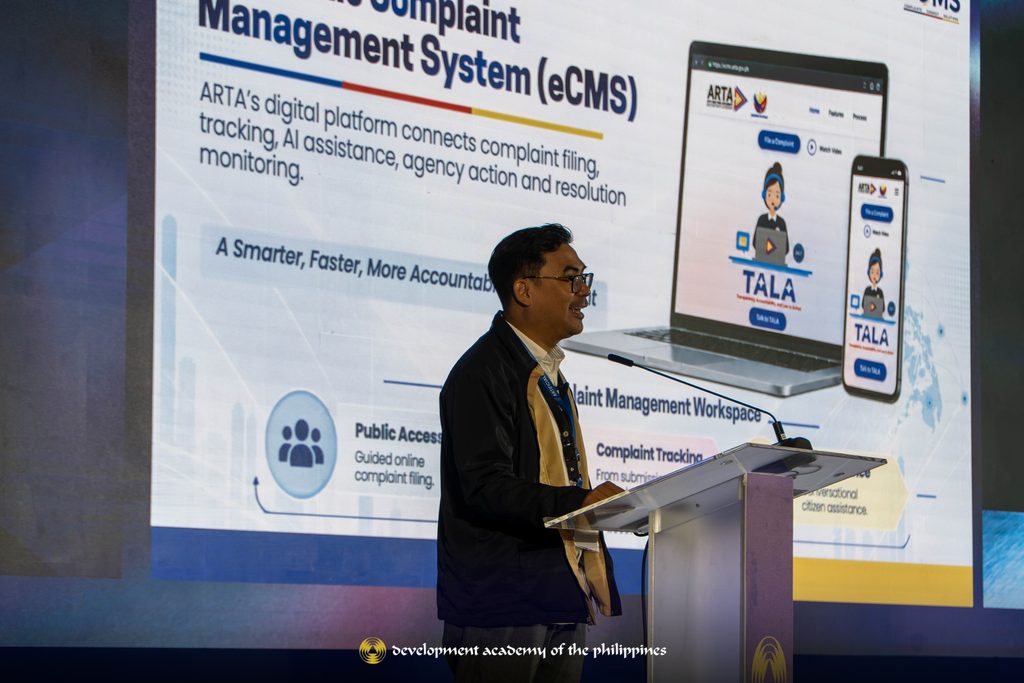
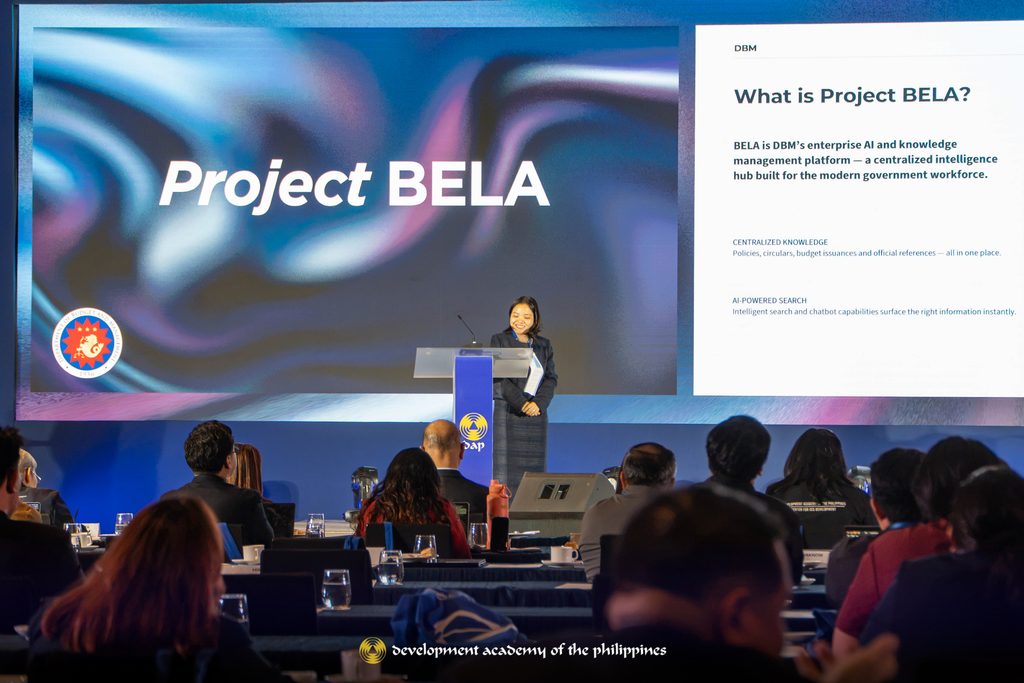
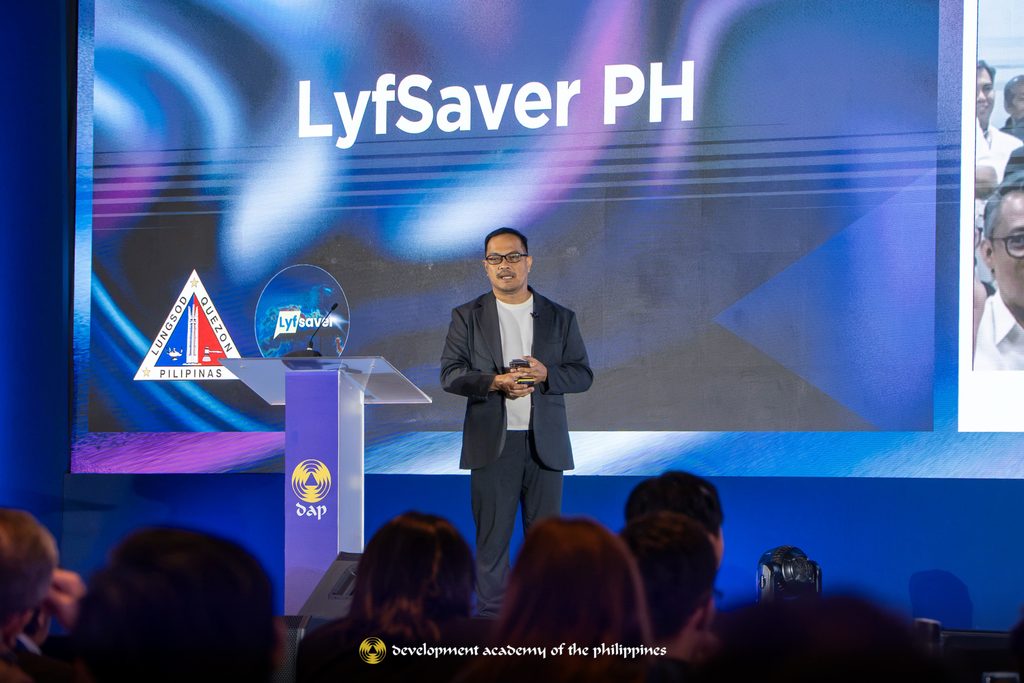
ARTA introduced TALA (Transparency, Accountability, and Law in Action), its AI-driven virtual assistant and complaint officer trained in various major Philippine languages. DBM showcased Project BELA, a localized version of ChatGPT. DOST-ASTI presented JUANAKNOW, its AI chatbot for science, innovation, and government support, while the Quezon City Government and LyfSaver PH featured an AI-assisted disaster response platform that connects community reports with response efforts.
From Experimentation to Adoption
Building on the foundations of AI-ready government, the second thematic segment explored how promising AI applications can move from experimentation toward wider adoption. Drawing from international experiences, Japan Productivity Center Executive Director Atsushi Miyasaka emphasized leadership, workforce participation, and human–AI collaboration as drivers of organizational transformation. China Productivity Center Management Consulting Business Group Director Ying Fu Tseng underscored the importance of practical AI applications that address real-world needs, supported by responsible governance and institutional readiness. Meanwhile, India National Productivity Council Director General Neerja Sekhar explored AI’s potential to expand access to essential services while emphasizing data protection and preparing people for the future of work.
DOST-ASTI Director Franz de Leon echoed these insights, stating that “Developing a working AI prototype is very different from developing a reliable government service,” emphasizing the need for data quality, security, accountability, and institutional readiness to translate AI experiments into dependable public services.
Private-sector demonstrations further illustrated applications of AI across education, mobility, and document management.
Hiraia presented a free, offline AI science tutor equipped with a custom Filipino large language model, a knowledge bank of more than 21,000 facts in Tagalog, Cebuano, and English, and nearly 28,000 practice questions. The platform aims to expand access to educational resources, particularly for children in households without internet connectivity.
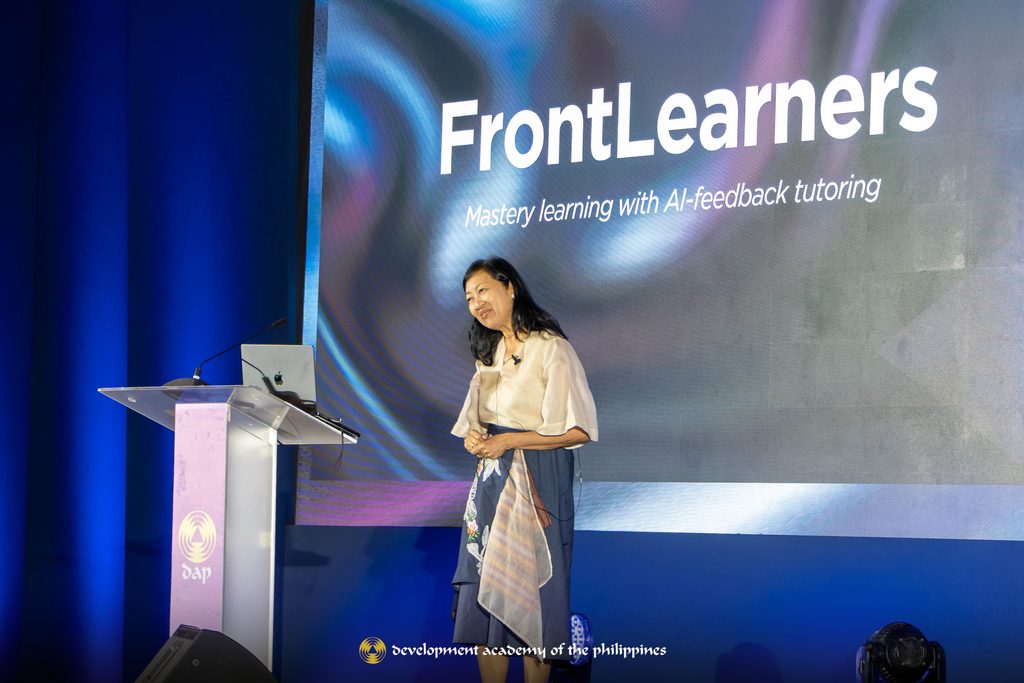
Meanwhile, FrontLearners, a 2026 DepEd Heroes awardee, showcased its mastery-learning platform featuring AI-feedback tutoring. Its initiatives were recognized for contributions to digital learning, support for DepEd’s PISA 2025 preparations, and the development of offline-capable learning systems for schools with limited connectivity. The company has also supported education technology research through thesis grants and provided supplementary learning resources to public schools.
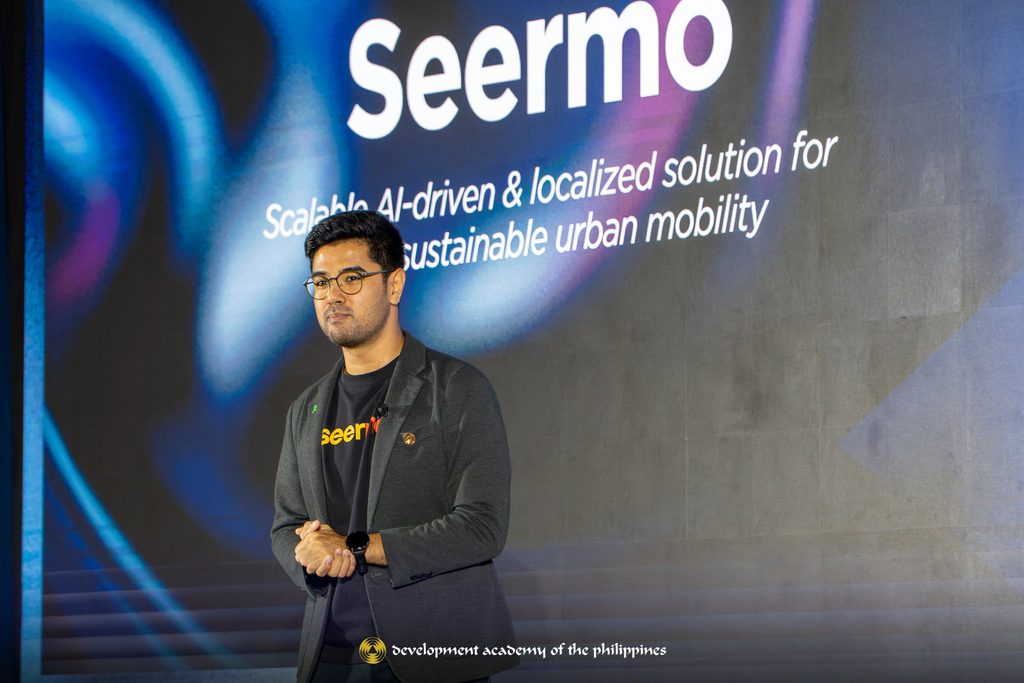
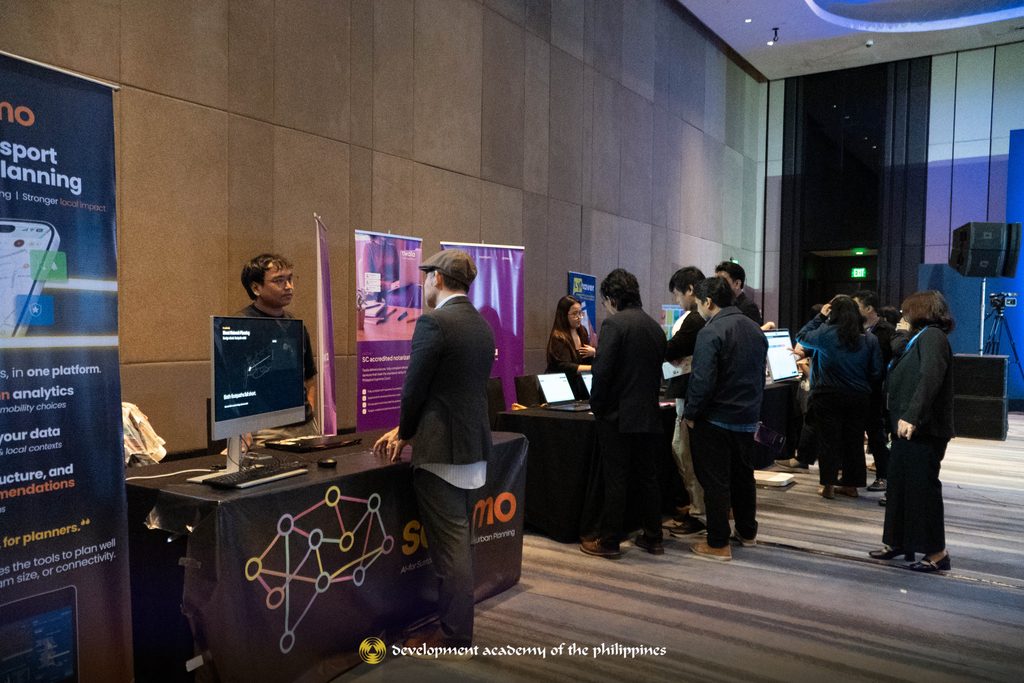
Mobility Vision Plus, Inc. demonstrated Seermo, an AI-powered urban mobility and city planning solution that combines community data collection, mobility analytics, and decision support to help planners make evidence-informed infrastructure decisions. The innovation currently has pilot deployments across Philippine cities.
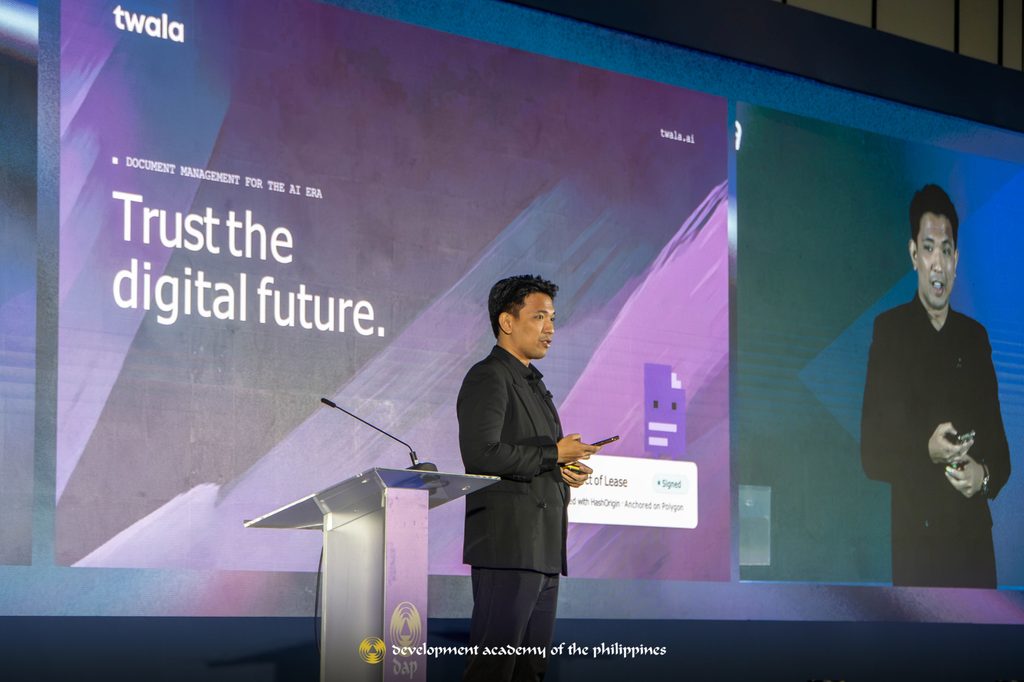
Twala presented its document management solution for the AI era, introducing electronic notarization as part of evolving digital workflows. Its milestones include Supreme Court accreditation as an Electronic Notarization Facility and the facilitation of the Philippines’ first two electronically notarized documents in October 2026. The company has also received recognition for technology innovation and ease of doing business, alongside DOST support and partnerships with legal institutions to advance digital legal services.
Building Transformation from Within
The third thematic segment highlighted AI innovations developed by DAP personnel, demonstrating how institutions can begin their own transformation by applying AI to their internal knowledge and decision-making processes.
These included TUKLAS, an AI-assisted research discovery tool for the DAP knowledge resource; TrendsWatch 2.0, an AI-supported foresight intelligence assistant; and Project ORACLE, an AI-powered policy assistant.
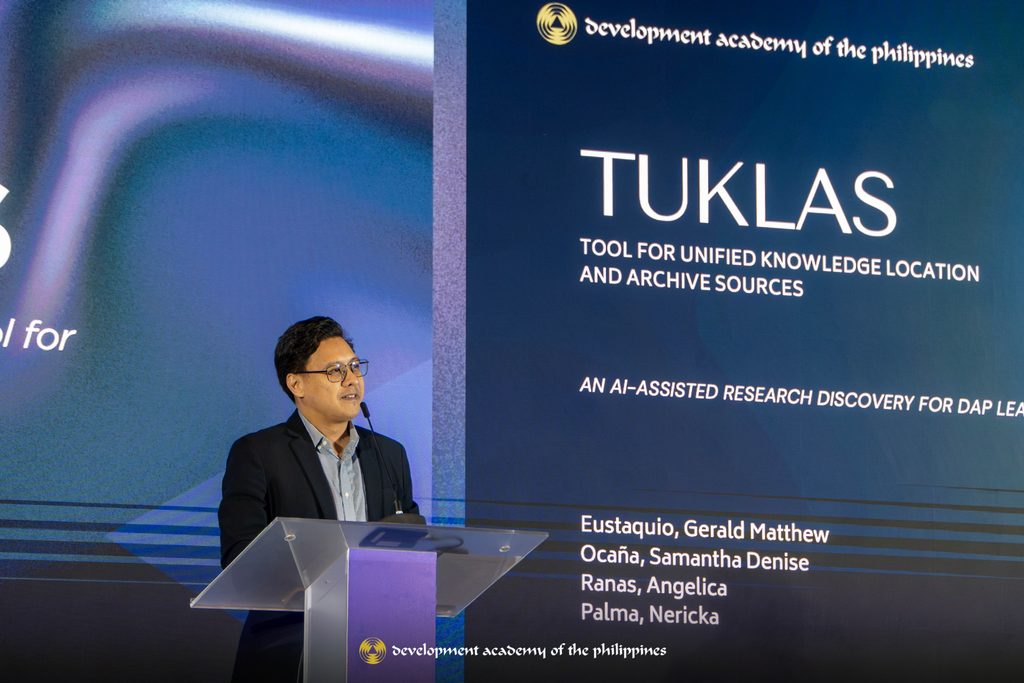
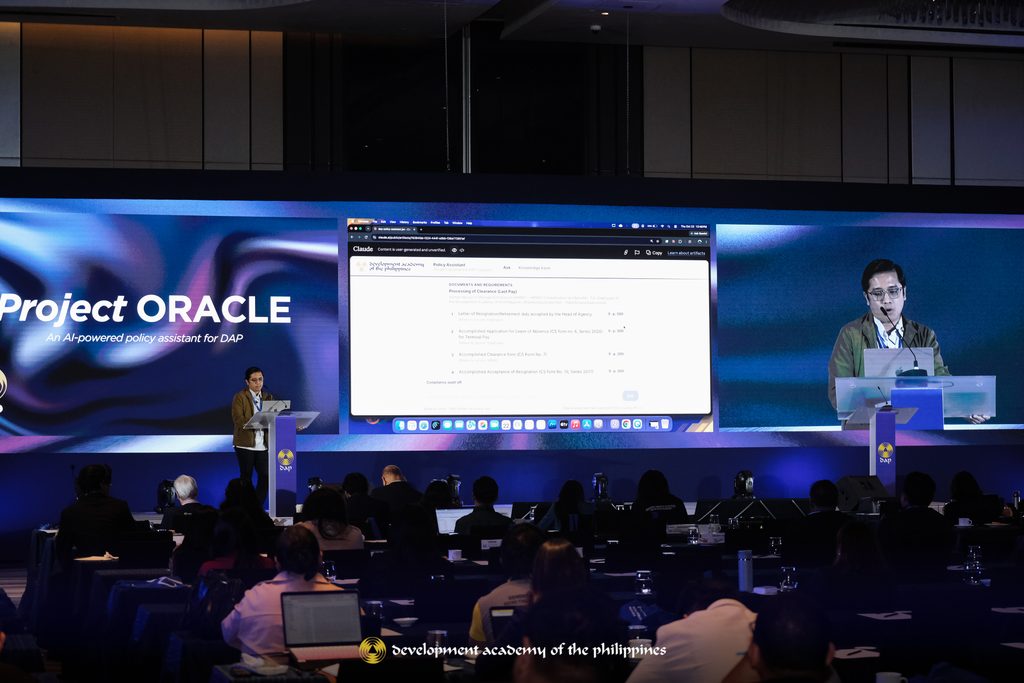
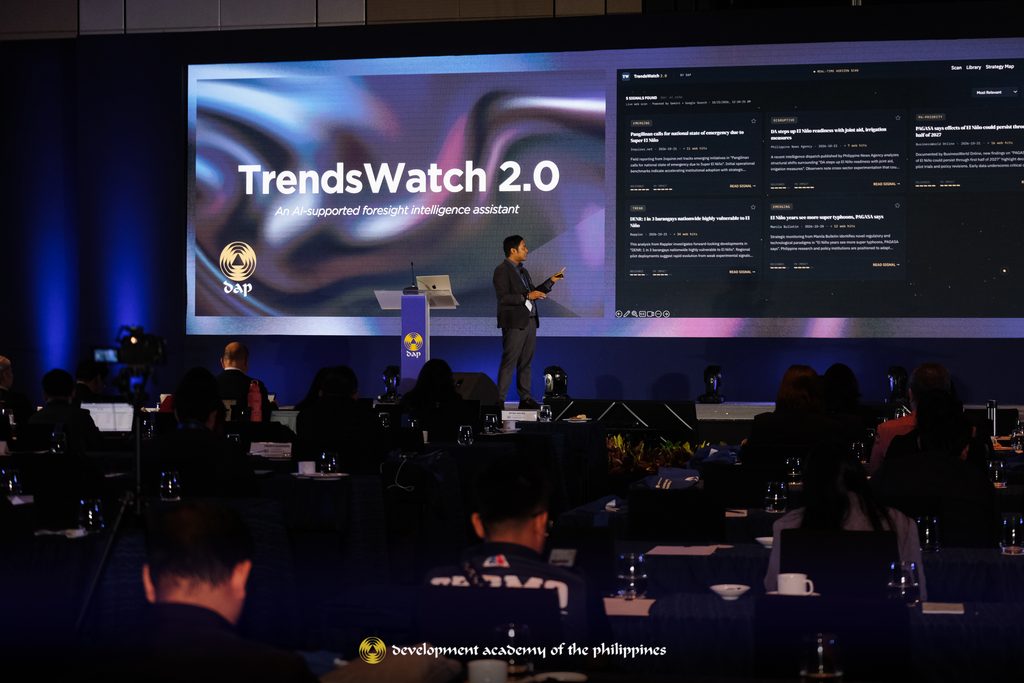
The innovations illustrated how AI can support knowledge discovery, foresight, and policy work within institutions, while strengthening the processes that underpin their respective mandates.
Connecting Insight with Action
Bringing together the insights from the three thematic segments, CSF Director Armand Tristan Suratos emphasized that agencies should examine how services can be redesigned rather than simply accelerating existing procedures. He described AI readiness as an institutional capability that requires trained personnel, reliable data and systems, safeguards, and leadership support.
Recognizing that agencies have different starting points, he encouraged them to identify a concrete service problem, define an improvement citizens would notice, and build the capacity to test, learn, and adapt over time.
Meanwhile, Officer-in-Charge Senior Vice President for Programs and Center for Governance Vice President Imelda Caluen called for sustained partnerships and concrete action toward better public service.
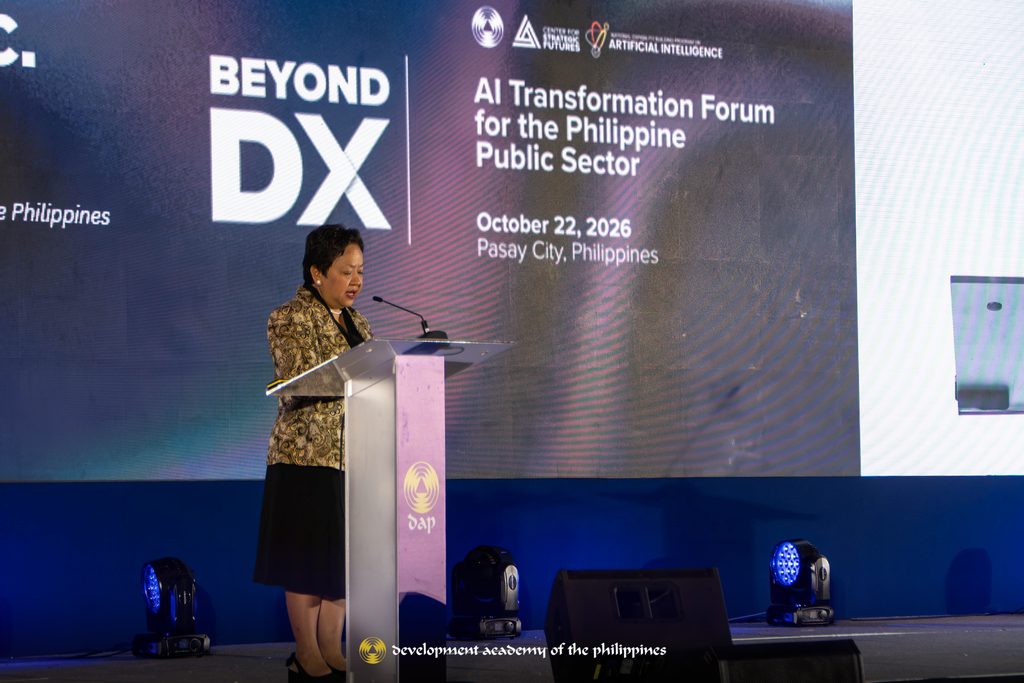
“Our ambition is a public sector where people have the competence and confidence to use AI well, where leaders can make informed decisions about its adoption, and where improvements are measured by their value to citizens,” she said.
Through Beyond DX, DAP-CSF extended its AI capability-building efforts beyond formal training, creating a platform for learning, demonstration, and collaboration. The forum encouraged public institutions to consider the government they seek to become—and the practical steps in leadership, governance, people, and processes needed to move toward that vision.