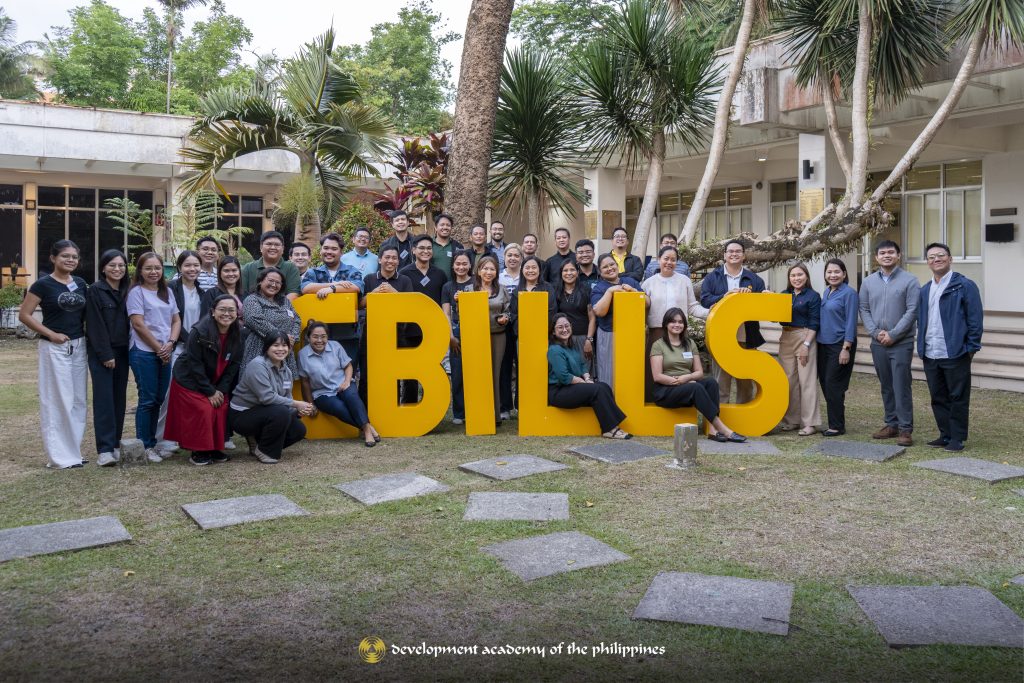
Tagaytay City, Philippines — The Development Academy of the Philippines (DAP), through its Capability Building on Innovative Leadership for Legislative Staff (CBILLS) Program, conducted a five-day legislative training course titled “Data Analysis in the Policy Process” for the Emerging Leaders track from 20 to 24 April 2026 at the DAP Conference Center.
The training gathered around 40 legislative officers and staff from the Senate of the Philippines and House of Representatives, who attended the course aimed to strengthen their skills in interpreting policy-relevant data and assessing policy options to support evidence-based legislative decision-making within the Philippine Congress.
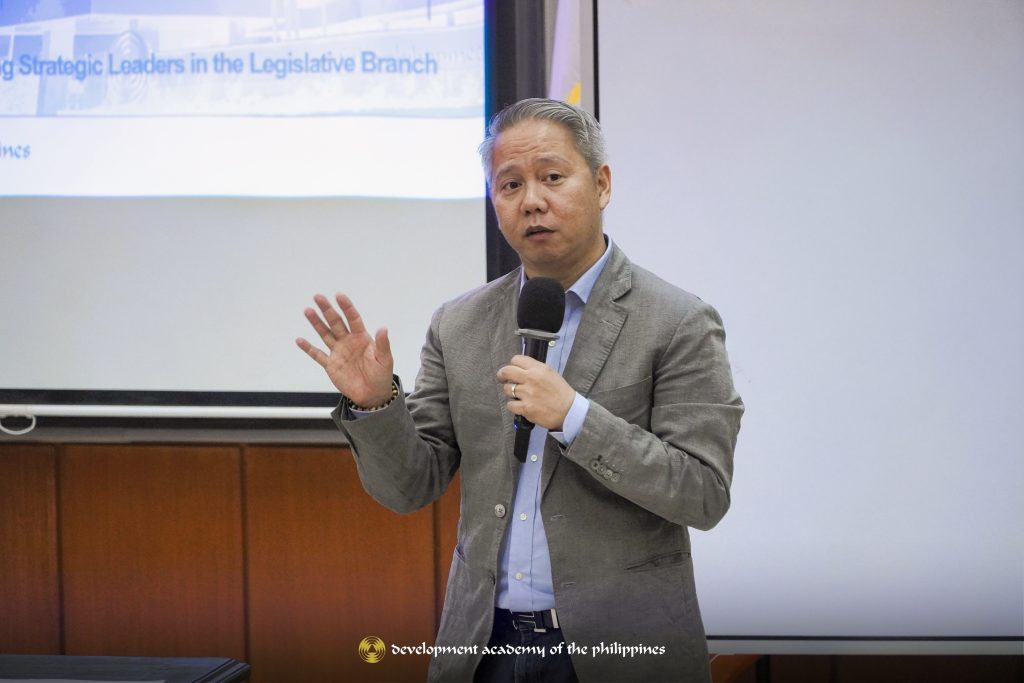
The course highlighted the role of data and evidence in policymaking—from identifying issues to formulating, evaluating, and communicating policy solutions. In his session, DAP Center for Governance Director Gilbert Lumantao underscored the importance of evidence-informed legislation in advancing sustainable development and public welfare.
“Effective policymaking must be grounded in data and evidence—transforming public issues into policy actions that advance sustainable development and promote public welfare,” he said.
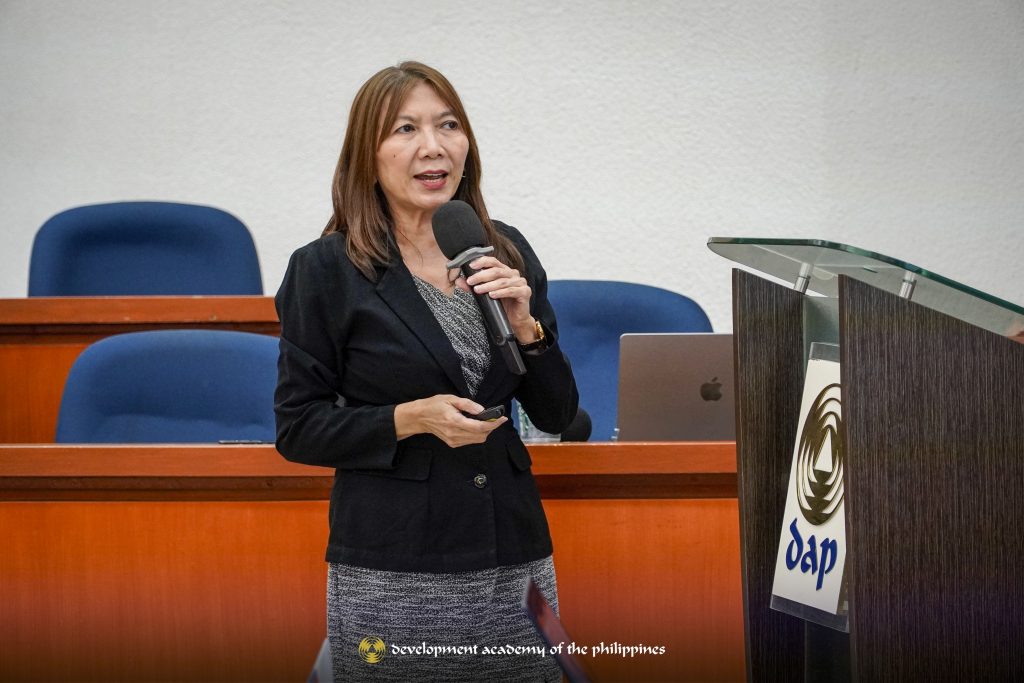
Further enriching the discussions, Dr. Josefina Almeda, Executive Director of the Philippine Statistical Research and Training Institute (PSRTI), talked about research methods, stakeholder mapping, and technical data analysis for policymaking. She emphasized the need to engage stakeholders through various quantitative and qualitative research approaches in policymaking to develop effective, inclusive, and responsive public policies.
To integrate analytical insights with effective communication, Atty. Richard Leo Baldueza, Committee Secretary of the House Committee on Banks and Financial Intermediaries, led a session on policy memo writing and communication. During the final session, he highlighted the importance of presenting clear, concise, and actionable recommendations tailored to decision-makers, while also emphasizing storytelling, ethical leadership, collaboration, and continuous learning in public service.
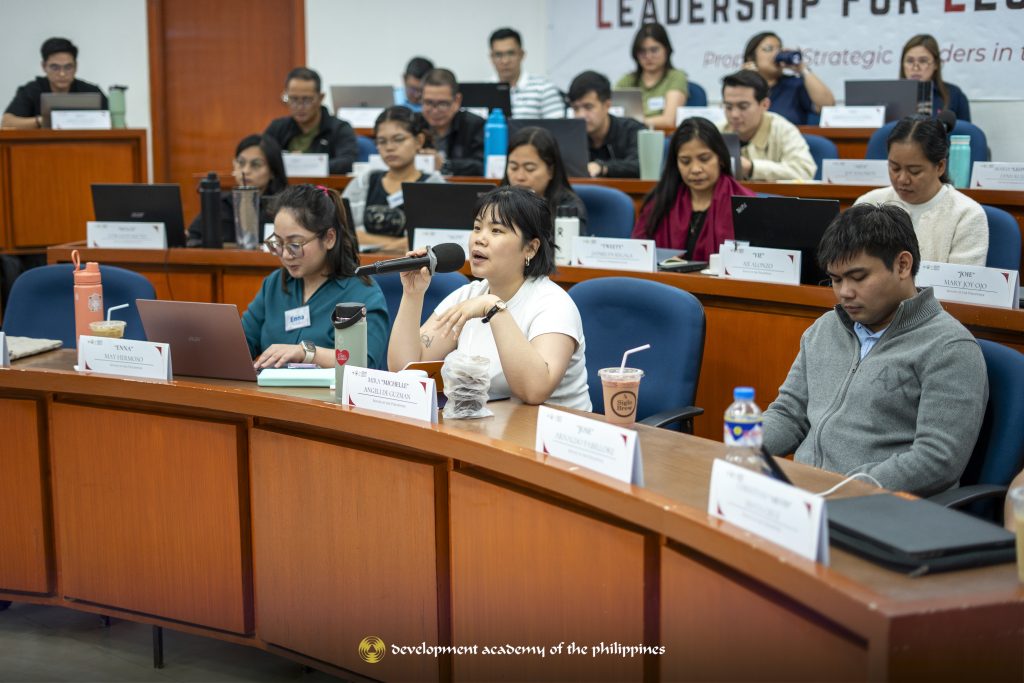
Throughout the training course, scholars worked collaboratively to develop policy memos addressing persistent socioeconomic issues centered around housing, education, agricultural sustainability, and internal displacement. During the culminating presentations, panelists provided insights and recommendations to further strengthen the quality of the outputs, particularly on how to effectively frame and communicate policy options in a strategic and impactful manner.
Through initiatives such as CBILLS, DAP continues to advance its mission of developing competent, innovative, and future-ready public sector leaders equipped to address complex governance challenges through evidence-informed policymaking. –Dannieliza V. Sambrano