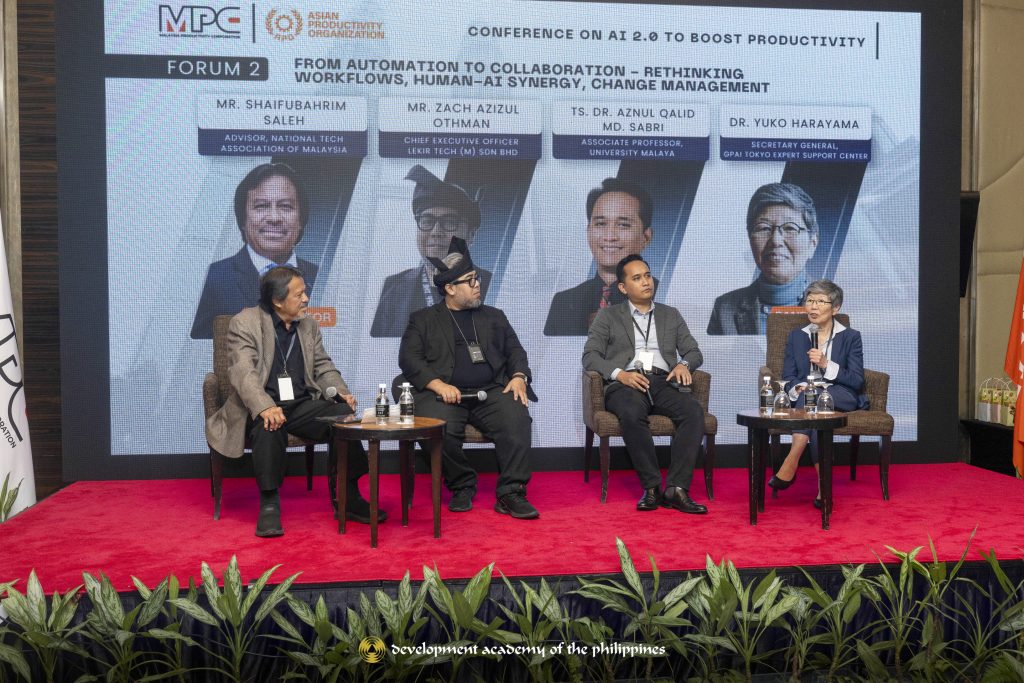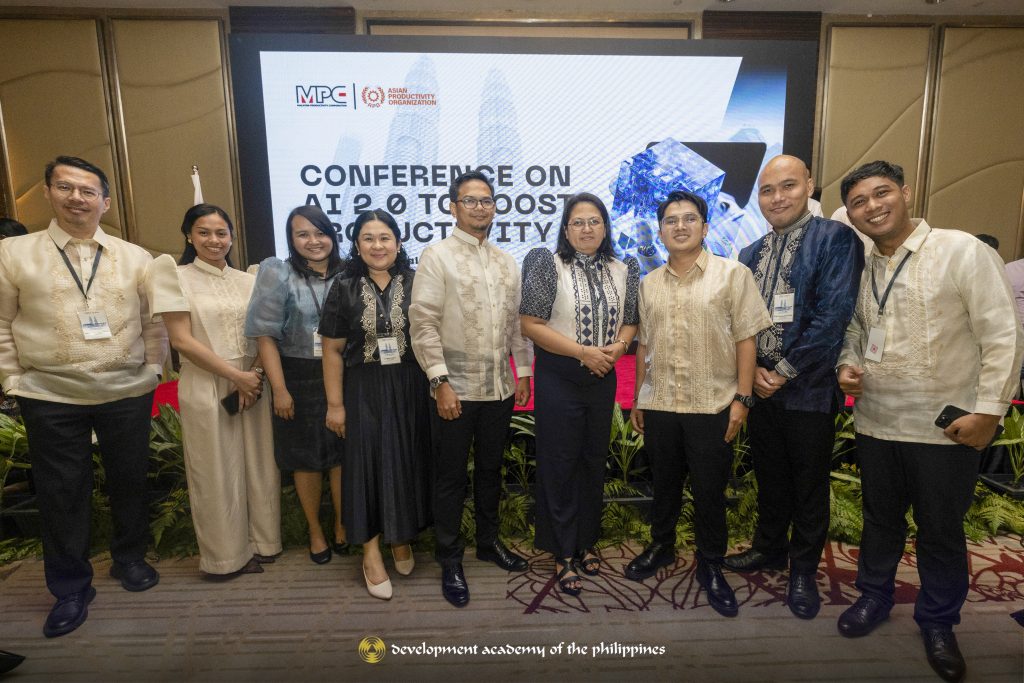
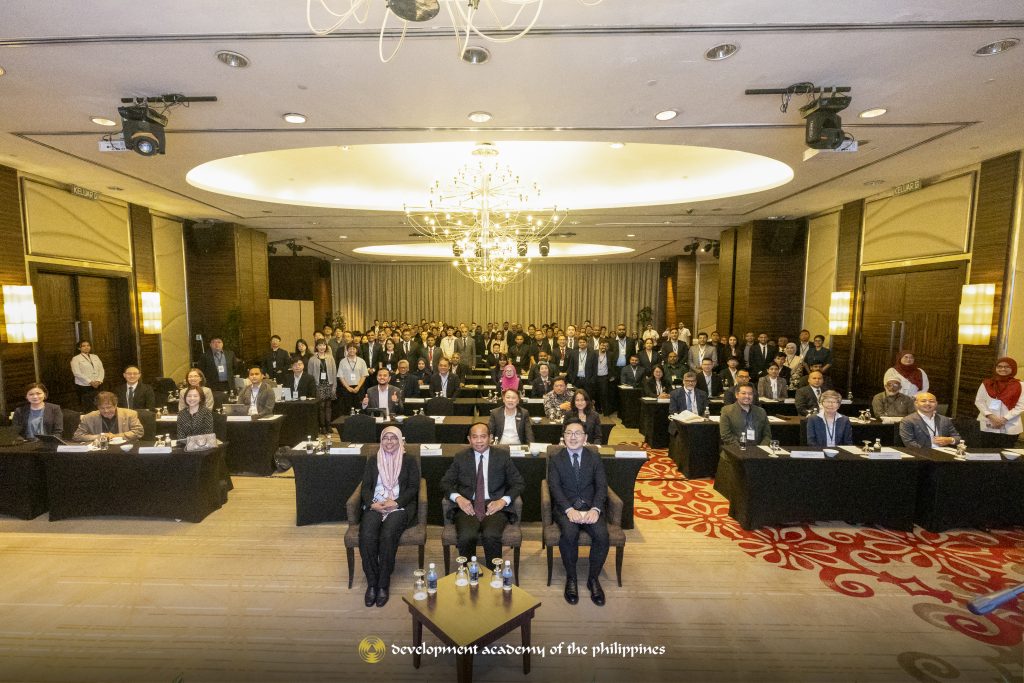
Representatives from the Development Academy of the Philippines (DAP) joined the Conference on AI 2.0 to Boost Productivity held on 21-22 April 2026 in Kuala Lumpur, Malaysia, as part of continuing efforts to strengthen public sector productivity, workforce readiness, and responsible AI adoption.
Eight of the nine members of the Philippine delegation came from DAP, representing the Academy’s APO/DAP Secretariat, Center of Excellence on Public-Sector Productivity (COE-PSP), and Center for Strategic Futures (CSF). The DAP delegation was composed of Director Peter Dan B. Baon, Director Armand Tristan R. Suratos, Alvin Joseph S. Bilog, Katrina Cabrera, Nissa Mariel M. Caderao, Ray Daniel G. Peralta, Innah Andrea B. Corral, and Eden L. Francisco. Dr. Ryndel V. Amorado of Batangas State University completed the Philippine delegation.
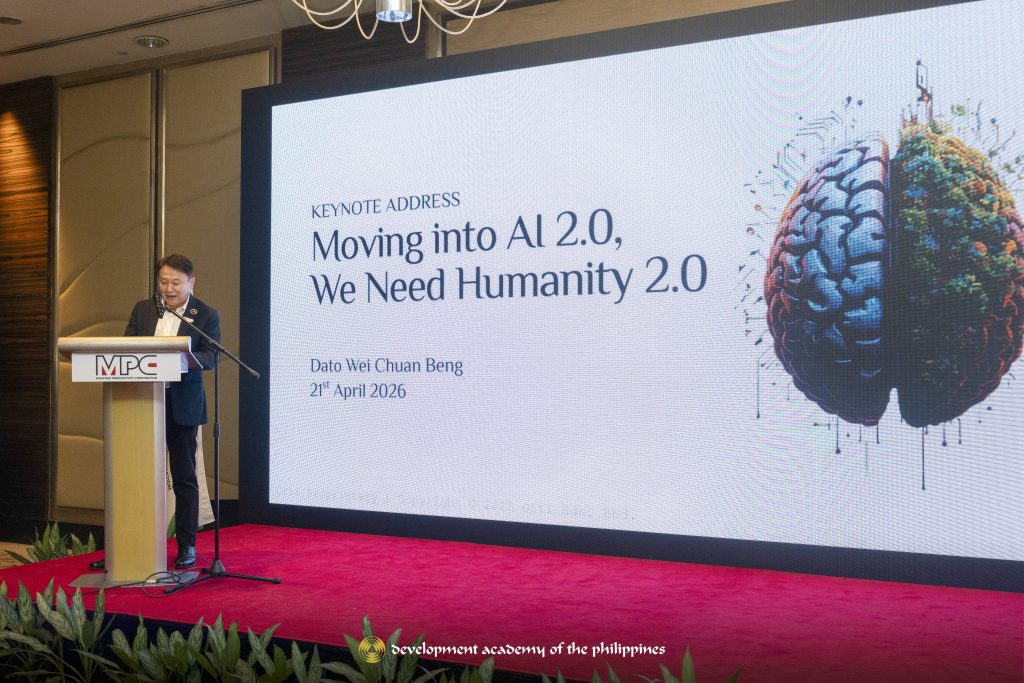
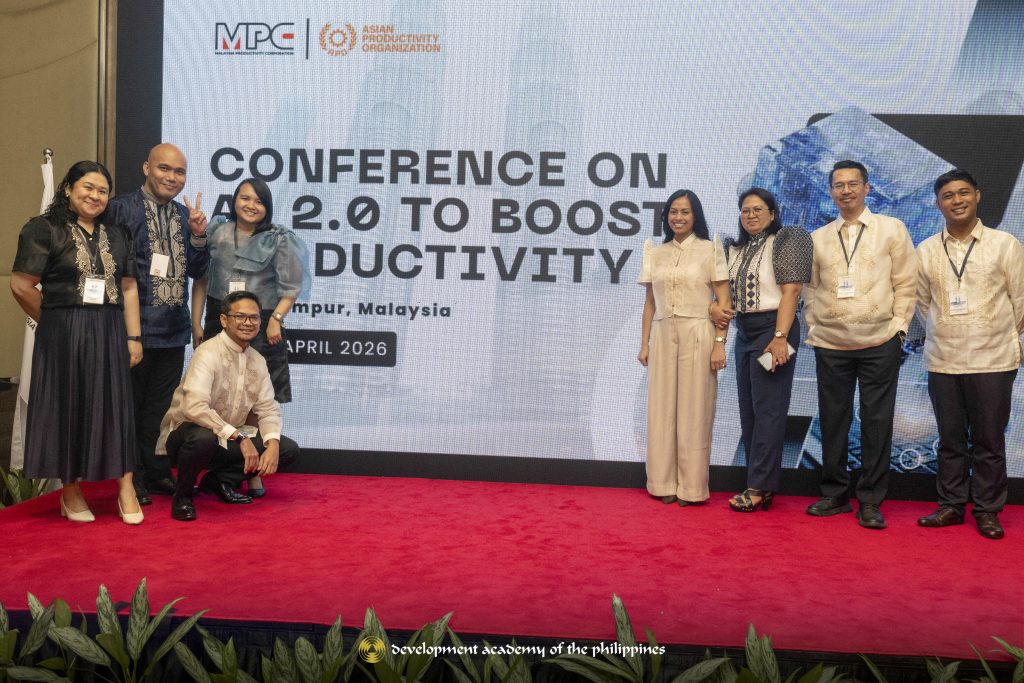
Implemented by the Malaysia Productivity Corporation under the Asian Productivity Organization (APO), the two-day conference aimed to increase understanding of AI 2.0 or agentic AI concepts and how these can be translated into measurable productivity gains when adopted responsibly. Discussions also covered real-world use cases and industry applications of AI and its productivity and economic impact, organizational readiness, data governance, human-machine collaboration, risks and challenges, and the future of work.
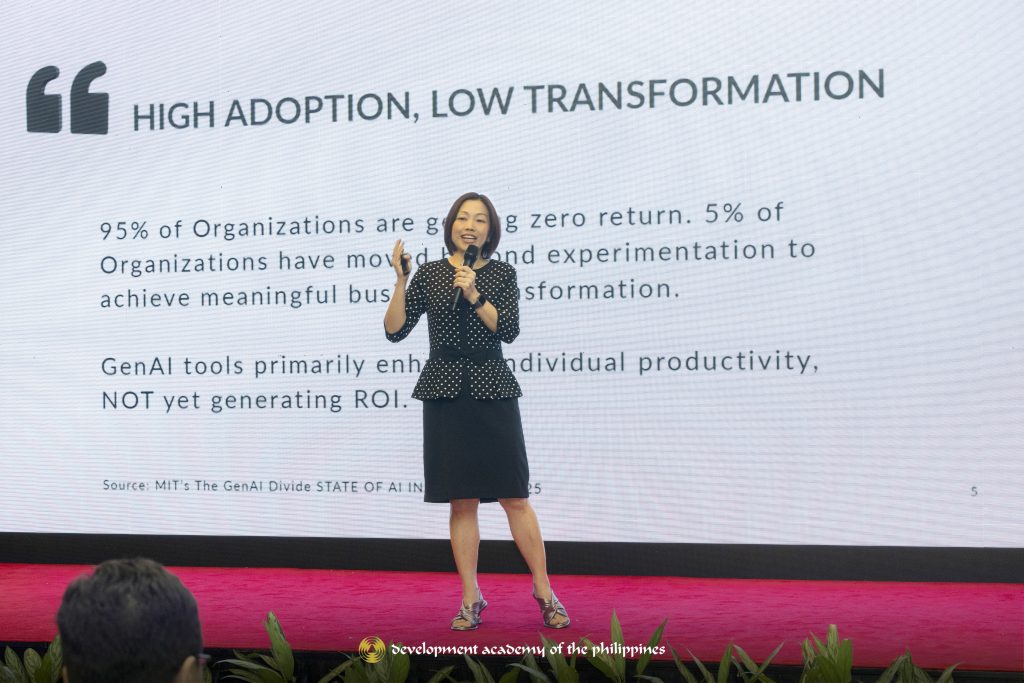
Following the conference, the DAP participants are expected to cascade key learnings and explore their application in ongoing and future initiatives related to public sector productivity. The concepts gained in agentic AI, productivity measurement, governance, and workforce readiness are advancing DAP’s ongoing National Capability-Building Program on AI, reinforcing its commitment to support AI literacy and capability development for the public sector workforce.
Through this engagement, DAP continues to strengthen its role in helping government institutions better understand, adopt, and govern emerging technologies in ways that are responsible, productivity-oriented, and aligned with public value.