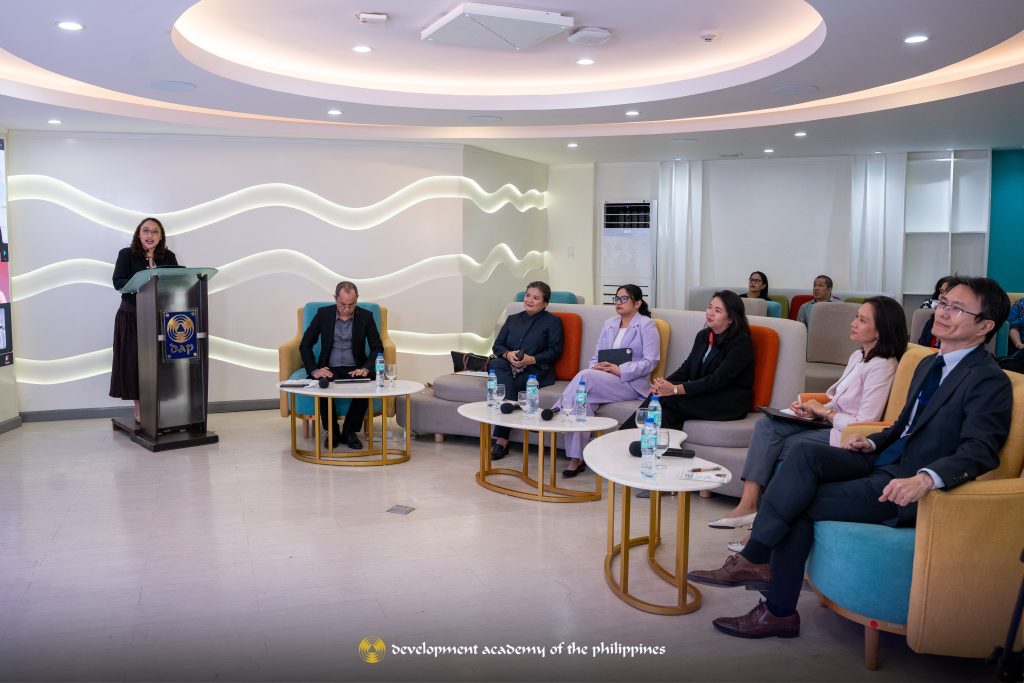
(L-R): Host Dannieliza Sambrano, moderator Atty. John Francis Panoncillo (House of Representatives – Committee on Transportation), Dr. Marie Danielle Guillen (UP Asian Institute of Tourism),
Dir. Nezza Mendoza (Department of Transportation), Ms. Alyanna Mae Bernadette (Quezon City Government), Dir. Patricia Mariano (AltMobility PH), and Mr. Shuji Kimura (Asian Development Bank)
The Development Academy of the Philippines (DAP), through its Capacity Building on Innovative Leadership for Legislative Staff (CBILLS) Program, concluded this year’s Thursday Talks Series with a multi-sectoral dialogue on the feedback gap between the realities of Filipino commuters and the policies shaping the country’s urban public transportation system, on 16 July 2026 via Zoom and Facebook Live.
Themed “Co-Creating Better Cities: Participatory Urban Transport Planning With and for the Filipino Masses,” the forum brought together representatives from the academe, the international perspective, national and local government agencies, and civil society to discuss ways of improving urban transit planning through greater public participation.
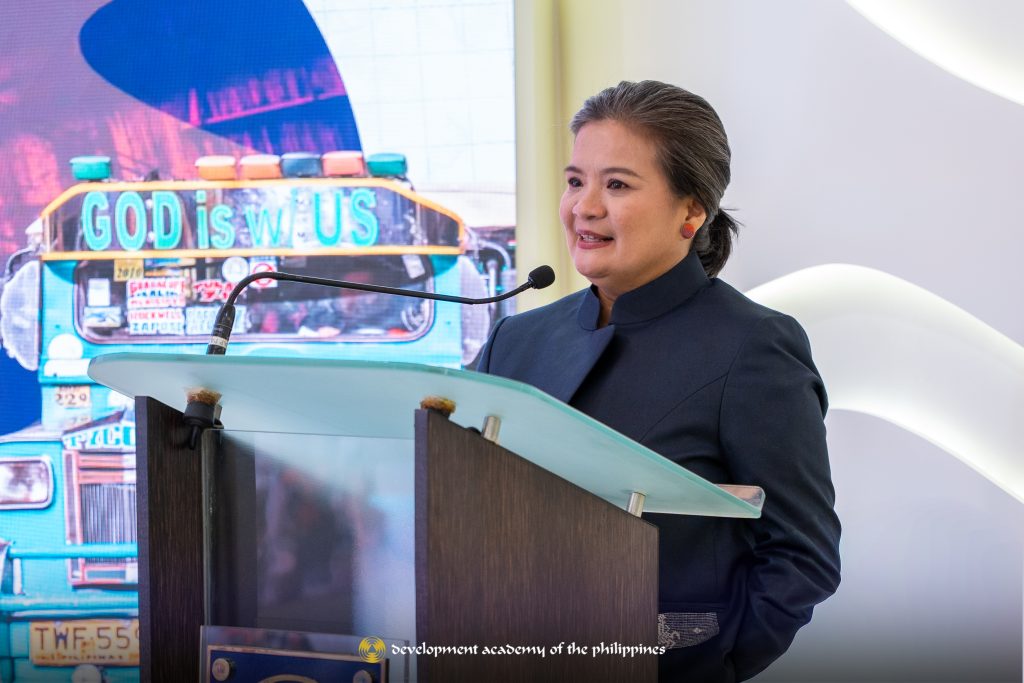
Dr. Guillen discusses the importance of not only listening, but also of using citizen feedback meaningfully in transport planning.
University of the Philippines – Asian Institute of Tourism Associate Professor Dr. Marie Danielle Guillen emphasized that the best transit system is the one designed with the people it serves, calling for “people-centered co-planning” where commuters are treated as partners instead of subjects of top-down transport planning. With commuters being the heart of the transport system, she highlighted the importance of their time, safety, comfort, and voices in building better mobility.
Dr. Guillen also presented various technical studies and travel demand models on the state of Metro Manila’s transportation system that, while essential, failed to capture lived realities–such as unsafe waiting sheds, inaccessible transfer points, and the challenges of Persons with Disabilities (PWDs) and senior citizens, highlighting low readiness for urban mobility, which has led to crisis-level conditions.
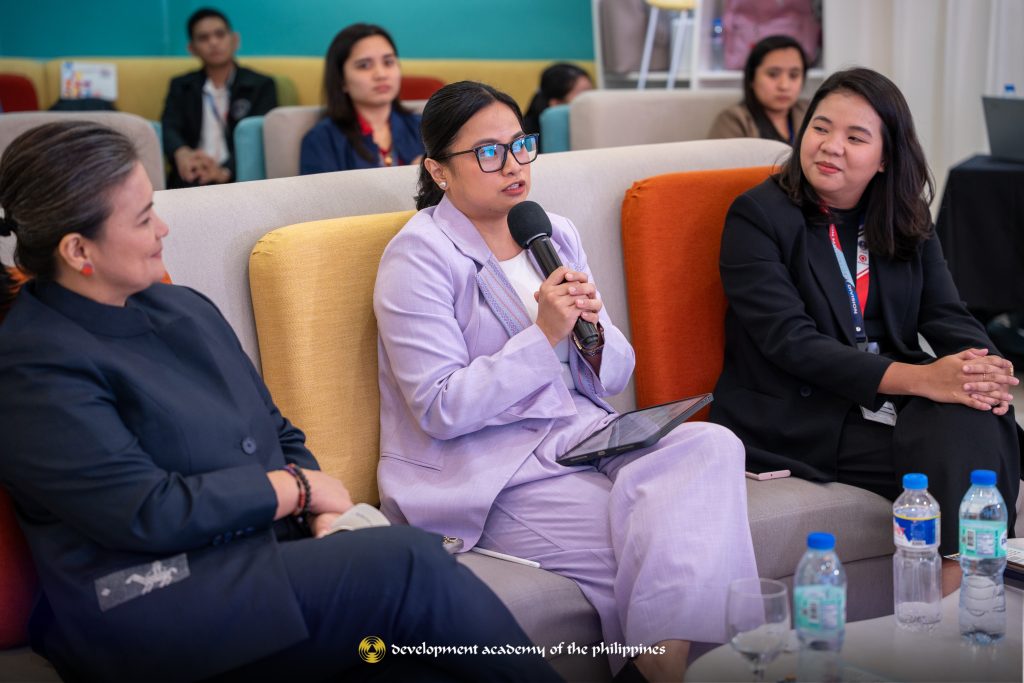
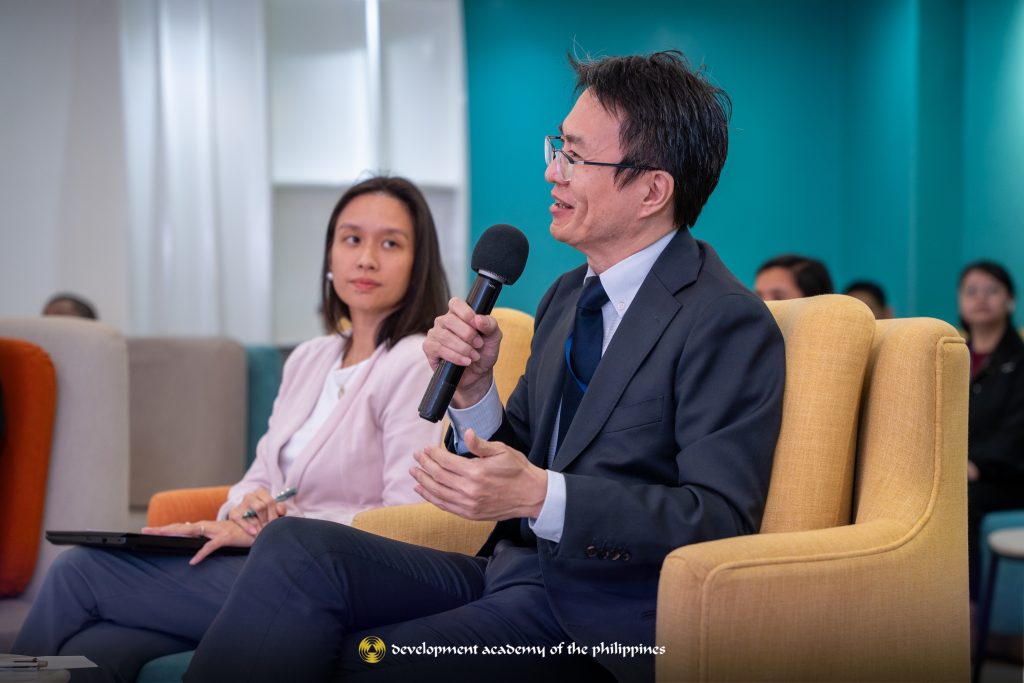
Panelists address questions from participants from Zoom and Facebook Live during the open forum.
Asian Development Bank (ADB) Senior Transport Specialist Shuji Kimura opened the panel discussion by drawing from the example of the government of Japan, where stakeholder engagement activities with vulnerable sectors are conducted throughout the project cycle to ensure compliance and active collaboration with constituents.
Meanwhile, Department of Transportation (DOTr) Transport Policy and Planning Service Director Nezza Mendoza introduced the agency’s efforts in institutionalizing stakeholder engagement in transport policy and planning, including the mandated “once-a-week commute to work” for its officials to build organizational commitment, implementation of the Active Transport Strategic Master Plan, and expanding commuter feedback channels and inclusion of cross-cutting themes (e.g., gender and development, climate change and environmental sustainability, and inclusive mobility).
Quezon City (QC) Government Traffic Operations Officer Alyanna Mae Bernadette then shared the city’s shift from one-time consultations to continuous engagement through its data dashboard channels. Drawing from the experience of healthcare workers during the Covid-19 lockdowns, she discussed ongoing projects such as free city bus service, pedestrianization, and protected bicycle lane networks.
AltMobility PH Director and Co-Founder Patricia Mariano called for a Magna Carta of Commuters that would recognize commuters’ right to safe, convenient, and affordable mobility and empowers them to co-create transport solutions and demand government action for unmet needs.
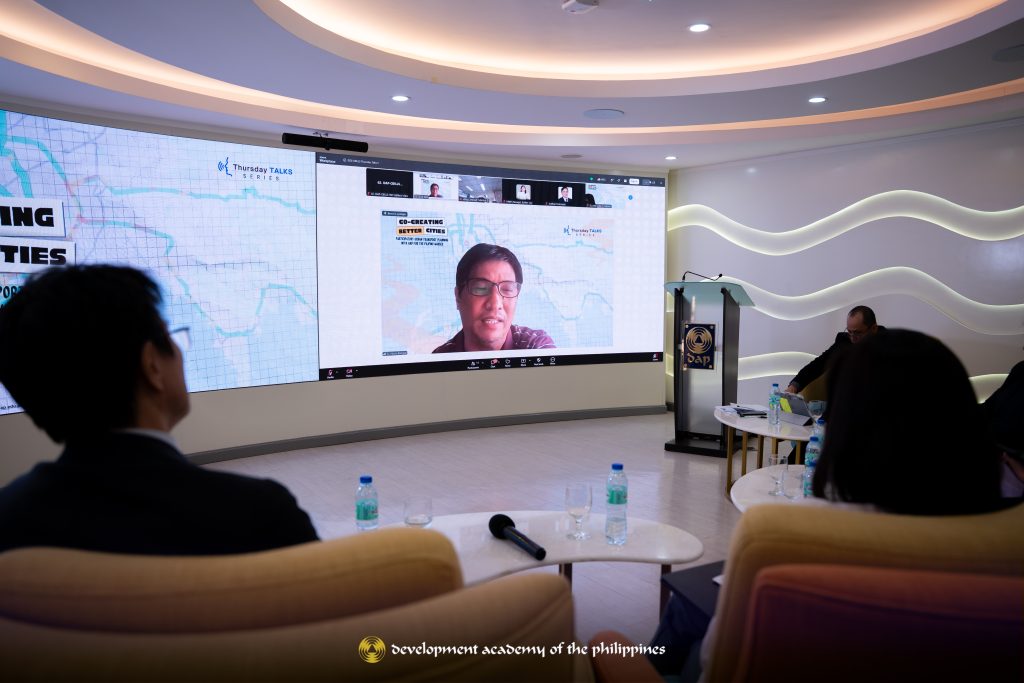
Mr. Novel Bangsal from the 2026 CBILLS Senior Leaders track questions the implementation gap in Philippine transport planning.
The online lecture hosted over 150 participants via Zoom and Facebook Live.
During the open forum, Dr. Guillen underscored the importance of transparency about budget and other limitations to sustain active relationships between government, stakeholders, and the public, while Directors Mendoza and Mariano urged the participants to advocate for bigger appropriations for active transport and non-motorized infrastructure.
House Committee Secretary on Transportation Atty. John Francis Panoncillo concluded the forum by stating that the real challenge comes with finding the balance among feedback that is evidence-based, timely, and representative, while also accounting for the country’s prevailing socio-economic and political realities.
In closing this year’s series, DAP Policy Research Office Director Gilbert Lumantao expressed hope that the lectures were able to serve as a platform to engage in meaningful conversations amid changes in the environment.
The Thursday Talks Series is one of the components of the CBILLS Program that campaigns for long-term planning by providing an avenue to discuss strategic issues that impact socio-political and economic governance. The recording of the third and final episode of the 2026 Thursday Talks Series is available to rewatch at https://cbills.dap.edu.ph/2026-thursday-talks. – Norvie Ann C. Aglibut (CBILLS intern)